
Still Standing After All These Years
Part 14: The Glendale Hotel, the Ingledues, the Slate Dirigible, and KIEV Radio, 1925
By Katherine Peters Yamada, May, 2025
Photos from Glendale History Room unless otherwise noted.
The suburbs of Los Angeles were booming in the 1920s, with investors, conventioneers and vacationers descending on the small towns surrounding Los Angeles. Investors planned new hotels, hoping to capitalize on the influx. In Glendale, one project stood out: the six-story Hotel Glendale, on the northeast corner of Broadway and Glendale Avenue.
Introducing the Ingledues
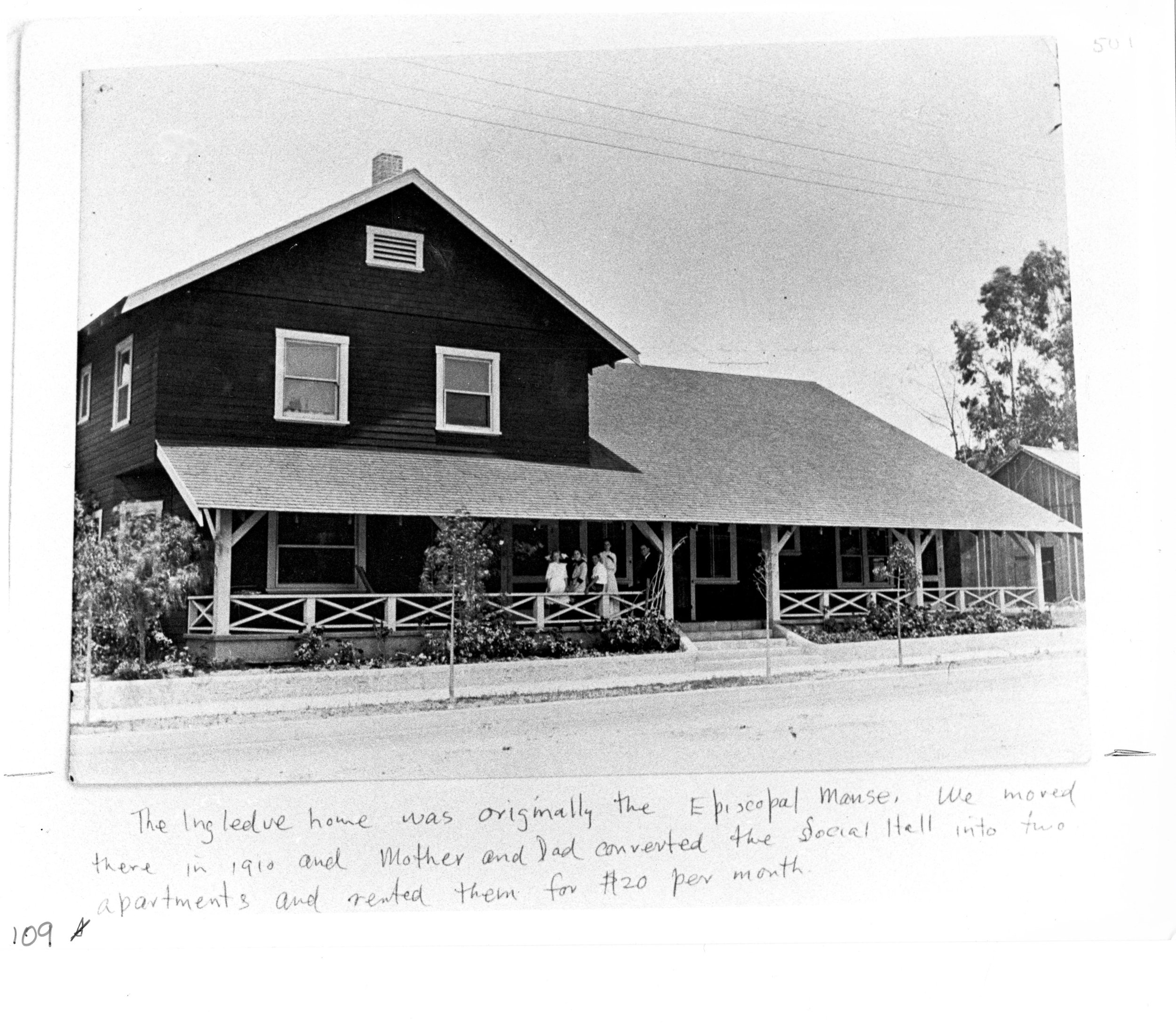
Ingledue Home, from Elwood Ingledue Collection, Courtesy of Glendale History Room
The man behind this project was C. W. Ingledue. In 1908, Charles Wilson Ingledue and his wife, Sybil Maude Whitney, and their children left Ohio for Riverside; there he worked in the meat business. Eventually they liquidated their Ohio holdings and, in October 1911, moved to Glendale, purchasing the former Episcopal manse and social hall at 501 East Wilson as a family home. Later, they turned the social hall into two rental units.
Ingledue took over the Glendale Market in the Watson Building, at the southwest corner of Broadway and Glendale Avenue; then the center of the business district. It was one of two local markets at the time. Shown in the photo are Shaver's Grocery Store, managed by H. G. MacBain, Carney's Shoe Store, owned by Dave Carney, and Ingledue’s Glendale Market. He soon purchased the building and merged his market with MacBain’s, opening the area’s first ‘supermarket,’ where both groceries and meats were sold.
As the city grew, Ingledue invested in real estate. In 1921, he sold his market and opened an office on Glendale Avenue. He was head of the Glendale Advancement Association when hotel construction began.
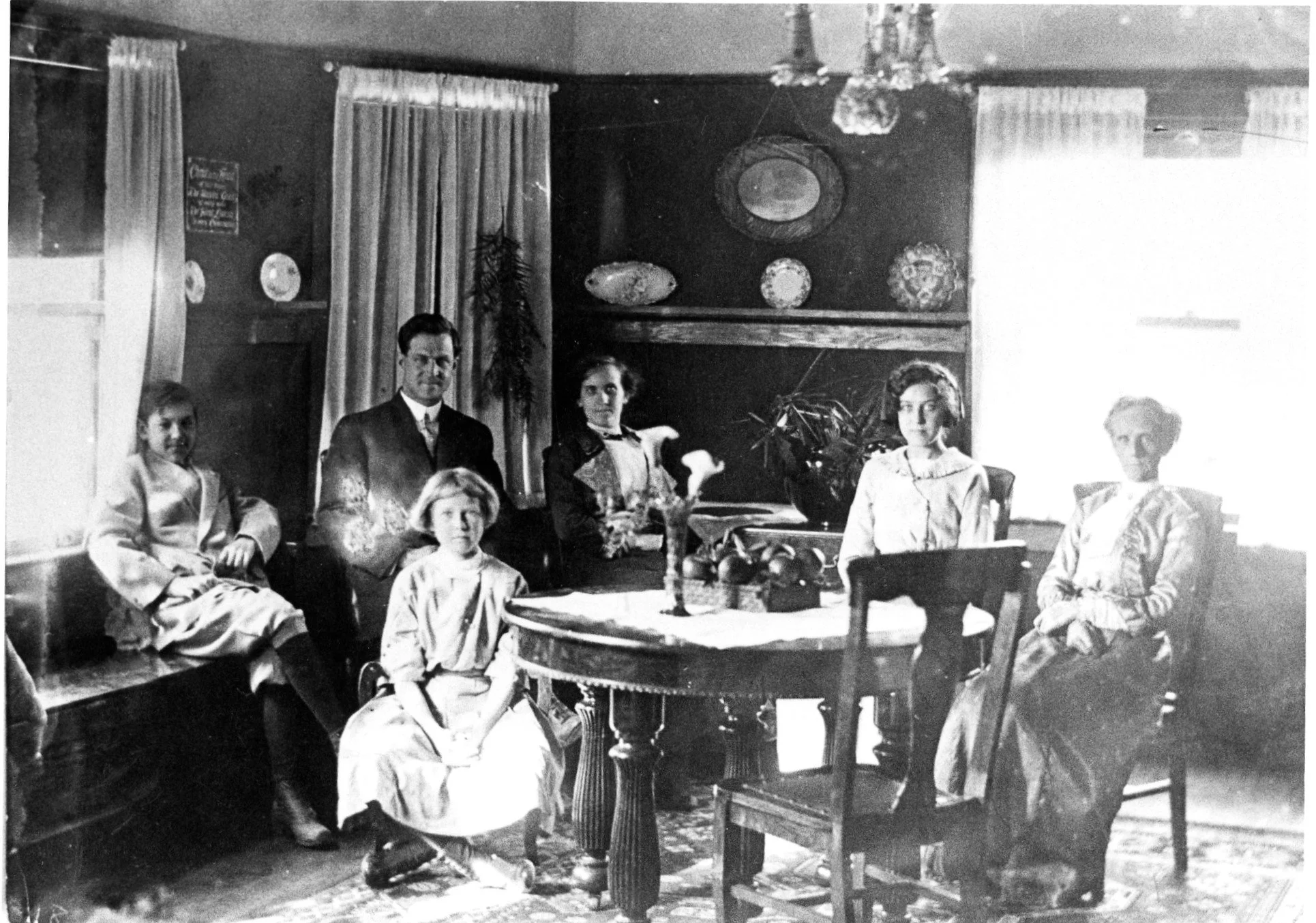
Ingledue Family, from Elwood Ingledue Collection, Courtesy of Glendale History Room
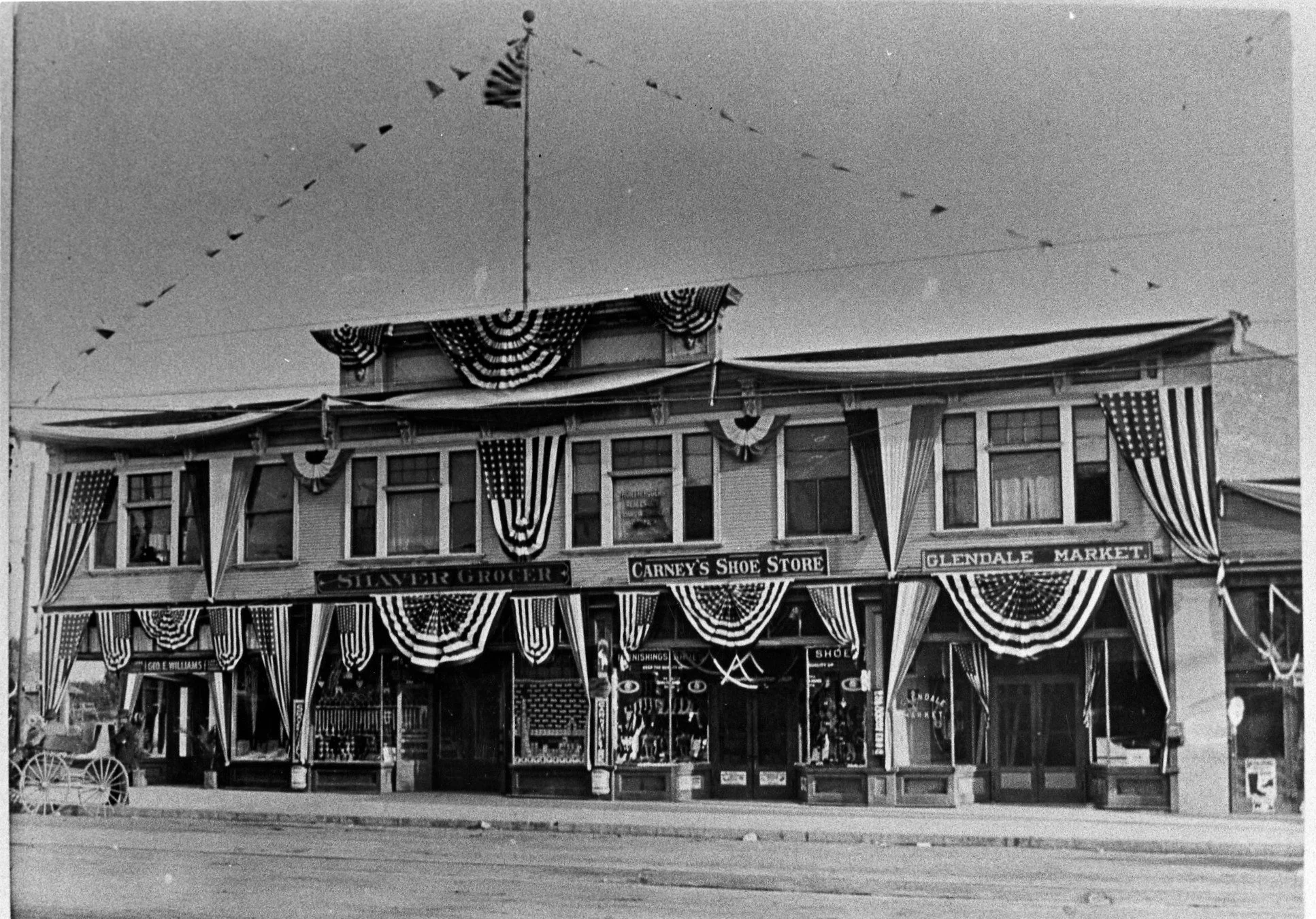
Watson Building, ca 1911, from Elwood Ingledue Collection, Courtesy of Glendale History Room
Elwood M. Ingledue
Son Elwood Ingledue, born in 1899 in Lima, Ohio, attended elementary and high school in Glendale; graduating in 1923 with a BA from Occidental College. He worked in the family’s business. He and Mary Rich, of Denver, were married in 1926.
The Hotel
C. W. Ingledue told the Glendale Evening News in late 1924 that his hotel was well situated at a busy intersection; plus the Pacific Electric, the Glendale-Montrose and Eagle Rock train lines and several buses all traversed the intersection.
His backers included Henry R. Harrower, founder of the Harrower Laboratory on Broadway, R.E. Spicer, also of the Lab, and S.C. Kinch, real estate investor and planning commission member. Others were realtors Mabel Tight and T.H. Menk and C.F. Stuart, proprietor of a nearby pharmacy.
The Architects

Hotel Glendale, ca 1926
Architects were Arthur G. Lindley and Charles R. Selkirk. Construction began in late 1924, finishing in mid-1925 at a cost of $640,000. The entrance, on an angle, faced the corner of Glendale and Broadway. It was a busy time for Lindley and Selkirk, as they were also designing the Alexander Theatre. Other projects included the Masonic Temple, a Glendale City Hall annex, and the education building at First United Methodist Church.
When the Glendale Historical Society conducted a walking tour of the Civic Center several years ago, attendees learned that the hotel was designed in the Classical Revival style, with architectural detailing molded to look like cast stone. The facade reflected the formal structure of a Classical column with a base at the ground floor, a simple shaft at floors two through five and a capital crowning the sixth floor. Originally, several ornamental urns lined the parapet, but have since been removed.
The hotel had two elevators, serving 160 rooms. The second, third and fourth floors held furnished apartments for long stay guests, while the upper two floors had standard rooms. Two dining rooms were below ground level, extending beyond the building’s perimeter. Glass blocks set in the sidewalk provided natural light to the dining rooms.
Grand Opening
The July 1925 grand opening was a two-day affair. Invited guests, dressed in Spanish attire, enjoyed a buffet supper and dancing in the blocked off street to the music of Kelly’s Shrine club orchestra. Son Elwood, night clerk when the hotel opened, later became the day clerk.
A year later, the Ingledues invited friends to a first anniversary party. By then, Elwood was hotel manager. The elder Ingledue told the Glendale Daily Press that the hotel had exceeded expectations. More than 5000 guests from all over the United States had been entertained. They had seen the hotel’s advertisements in railroad folders and some had come to look and had stayed.
“As to the management of the hotel, which was a line entirely new to me and to my son, we have enjoyed the work because it has so many interesting angles and we are looking forward with confidence to the coming year.’’
Thomas Slate and the Slate Dirigible
Around the same time that the hotel opened, Thomas Slate, an Oregon native who had made a fortune developing a formula for dry ice, sold his business and relocated to Glendale.
“Lighter than air transport” was popular at the time, according to Wikipedia, but the airships then being designed used helium and had several flaws. Slate intended to use hydrogen gas instead.
He planned a coast-to-coast passenger service, with his airship landing on the rooftops of large hotels across the nation, according to a detailed description in the Los Angeles Times, Aug. 5, 1928. “A traveler leaving Los Angeles will wait for the ship on the roof of the hotel. Promptly on schedule, a great silver-gray airship will appear overhead and hover, nosing into the wind.” An elevator would descend from the ship for passengers and the airship would be refueled during this time.
Slate had chosen the new Hotel Glendale as a landing site. He sold shares in his new company, found property near Glendale’s new airport, hired a crew and went to work.
By 1928, he was on his third airship. The LA Times article noted that the first two had been destroyed by high winds, but he had built a huge hanger to protect this one. Earlier that year, European cruise line personnel had checked out mooring possibilities in the harbor and had also come to Glendale to see if Slate’s airship could transfer passengers to and from their ships.
In January 1929, the airship - named the ‘City of Glendale’ to thank the city fathers for their support - was brought out of the enormous hanger. Hundreds cheered as it rose 30 feet.
Further testing was delayed to the end of that year. It was a warm December afternoon and the heat “within the metal body raised the internal pressure to the point that it popped the emergency relief valves,” according to Wikipedia. The airship was moved back inside.
A young boy’s view
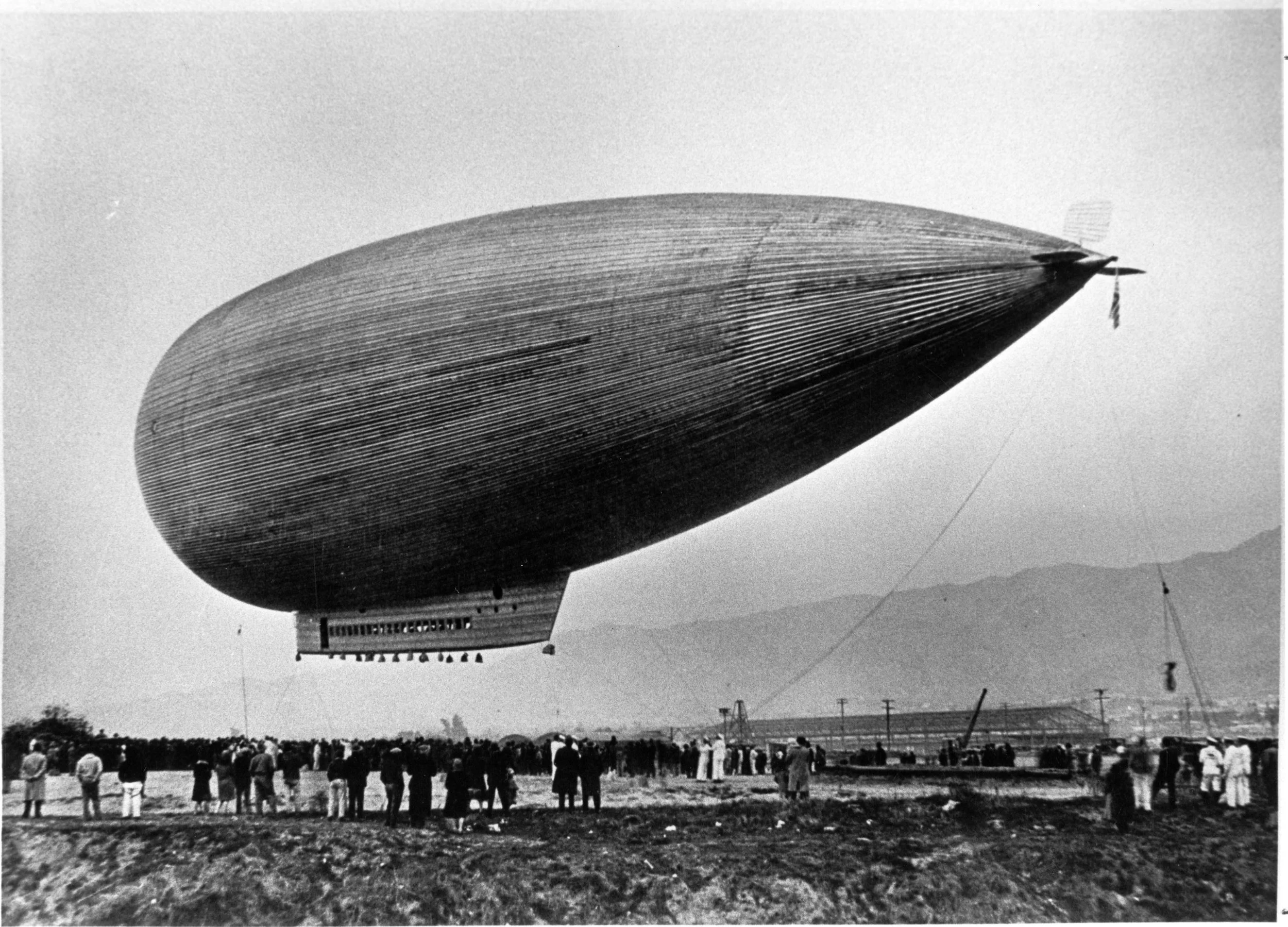
Slate Dirigible
Two days later, the crew tried again. Another huge crowd gathered. Among them was an 11-year-old boy, Don McDonald, who came with his father. This time, the propellers were already spinning as the airship emerged from the hanger and was readied for launching. “We were part of an excited crowd watching this much-publicized event. As the huge craft slowly rose, it suddenly stopped and sank back to earth. We found out later that a hydrogen intake valve had stuck open and the pressure had popped a number of rivets.”
The entire right side was damaged. McDonald, whose memories were included in a Glendale Historical Society newsletter, continued, “because this could not be corrected without completely rebuilding the ship, Slate’s enterprise was sunk, wiping out the (mostly Glendale) investors who had joined him in his dream, which included a mooring mast above the Glendale Hotel.” Remnants were sold for scrap at sixty cents per pound, everyone was discharged and the Slate Dirigible Corporation closed its books.
The Hotel Glendale
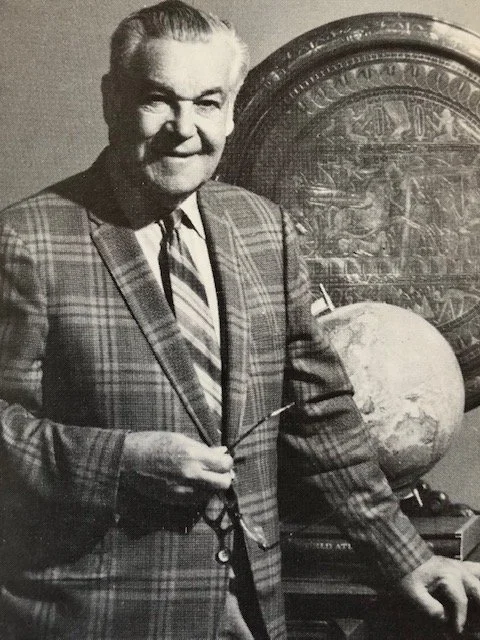
Elwood Ingledue
The hotel was out of Ingledue control by this time. Elwood had been manager from 1925 to 1928, but due to economic issues and other forces, the hotel had struggled and soon transitioned into long-stay apartments. He resigned in 1928 and began publishing ‘The Hotel Informant.’ In 1939, he created the ‘Hotel Index,’ an international directory of hotels and resorts.
Ingledue joined the Glendale Kiwanis, supported the Boys Scouts, Red Cross, and Chamber of Commerce and served as president of the Glendale Old Settlers Association. Mary Ingledue was also very active. She was a member of P.E.O., the Women’s Committee of the LA Philharmonic and the Glendale Symphony. For 25 years, she was secretary of the Crippled Children Society of Glendale. She joined AAUW and Gamma Phi Beta sorority.
The couple, who had two sons, Richard and Ronald, traveled extensively for thirty years, developing a worldwide network of offices. In 1968, Elwood sold his publications and built the Pacific Plaza Inn and Cafe at 720 North Pacific. Mary Ingledue died in 1972. Elwood later married Alice Lee Gregg Johnson.
According to Carroll Parcher’s Glendale history books, the prevailing opinion at the time was that the original hotel investors were enthusiastic, but had little knowledge of the business. “Neither Ingledue nor his associates were hotel men and the six-story, 160-room structure… turned out to be poorly planned for its purpose. ”Parcher added, the hotel was “never a flaming success.” But, it reflected the “spirit of enthusiasm and willingness to move ahead which was prevalent among the businessmen of that period.”
KIEV Radio
Around 1930, two steel towers, purchased from KNX in Hollywood, were installed behind the former hotel and in 1931, a new radio station, KIEV, hit the airwaves. Radio personalities Dick Whittinghill, Don Rickles, Sam Benson and Dick Sinclair entertained listeners with banter and music, while local clergy spoke on religious and inspirational topics. Broadcasters Reed Callister and David Cannon worked from the basement for thirty years before moving to the first floor.
In 1961, KIEV was purchased by William Beaton. After Beaton’s death in 1985, his two sons, Fred and Ron, took control. In 1989, nearly sixty years later, KIEV moved to San Fernando Road. The landmark towers were later taken down.
Still Standing
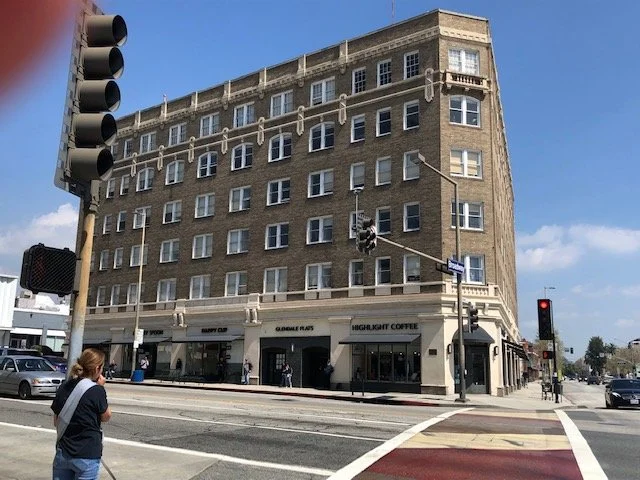
Hotel Glendale hotel, 2024. Courtesy KPYamada
In 2009, I was invited to visit the old hotel in preparation for a Verdugo Views column. I toured the building from top to bottom, and walked through the former dining rooms. Later, outside, I saw dark rectangles in the sidewalk that once held glass blocks. Over the years, the blocks had broken and the openings had been filled in with concrete.
On my tour, I heard rumors of an underground bar supposedly patronized by Clark Gable. Later, I read a couple of Glendale News-Press columns, by writers Liana Aghajanian and Ryan Carter, both intimating that Gable frequented the hotel’s underground bar/speakeasy back in the day.
Now, in 2025, as the building nears 100 years since its grand opening, the building’s manager, Grey James, explores the hotel’s history and pays homage to the idea of “its famed speakeasy roots,’’ in his blog: thecavewinestorage.blogspot.com
The Hotel Glendale Hotel is #17 on the Glendale Register of Historic Resources and is also listed on the National Register of Historic Places.
The 1968 Pacific Plaza Inn and Cafe at 729 North Pacific eventually became Acapulco Restaurant.
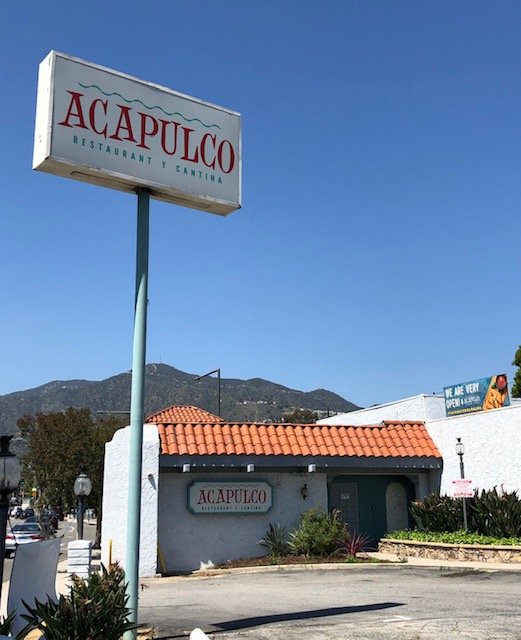
Acapulco Restaurant. Courtesy KPYamada
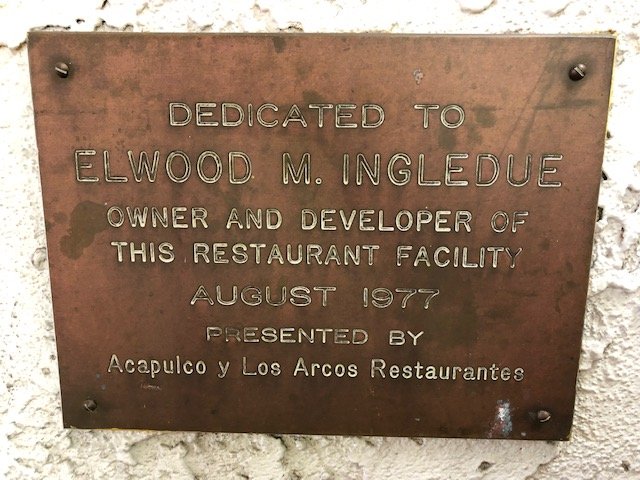
Plaque. Courtesy KPYamada
Resources
The Glendale History Room, on the second floor of the Central Library, has city directories dating back to 1906, photographs of early Glendale, and archival collections on the Glendale Unified School District, Forest Lawn, theaters of Glendale and other Glendale-related topics. Visits are by appointment only (please email glendalehistoryroom@glendaleca.gov)
Our local history was studied extensively by early historians, including John Calvin Sherer, who authored ‘History of Glendale and Vicinity’ in 1922. Carroll W. Parcher incorporated much of that information in `Glendale Community Book,’ published in 1957. A later version, ‘Glendale Area History,’ was published in 1974 and expanded in 1981. Unless otherwise noted, much of what is included here is from these books and from “Glendale, A Pictorial History.”
Other Resources
Glendale Evening News, October 31, 1924
Glendale Daily Press, July 16, 1926.
Los Angeles Times, Aug. 5, 1928
Verdugo Views July 18, 2008
Verdugo Views Sept. 6, 2018
Glendale Area History, 1974
Glendale Area History, 1981
Spring 2011 Glendale Historical Society’s newsletter
TGHS Walking tour of Civic Center, ca 2014