
Still Standing After All These Years
Part 16: FDR’s New Deal: Glendale College, Civic Auditorium, Verdugo Wash and Bridges, and City Hall
By Katherine Peters Yamada, October, 2025
Photos from Glendale History Room unless otherwise noted
The ‘New Deal,’ was a roll out of several reforms instituted by President Franklin D. Roosevelt in response to the Great Depression, which began in 1929. Important components were programs such as the Public Works Administration (PWA) and the Works Progress Administration (WPA), which, according to Wikipedia, “organized and provided funds for the building of useful works such as government buildings, airports, hospitals, schools, roads, bridges, and dams.”
Through these programs, Glendale gained a junior college, a civic auditorium, a flood control channel - complete with bridges - and a new city hall, along with several other projects.
Glendale College
One of the first projects was a new campus for Glendale College. The college, as we know it today, is the product of both the New Deal and the 1933 Long Beach Earthquake. It opened in the fall of 1927. At first, classes were held on the new Glendale High campus at Broadway and Verdugo Road, after high school students had finished for the day. However, the JC students were often moved from one classroom to another, depending on availability.
Within two years, the JC students were relocated to the former high school campus on Harvard Street. However, the 6.4 earthquake caused so much damage that the 1909 structure was condemned. Students attended classes in tents hastily assembled on the lawn surrounding the former high school. With federal funds available through the New Deal, voters passed a $195,000 bond issue in October 1935, with the understanding that a 45 percent grant would be provided by PWA. Eventually, a $174,000 grant was received.
A 25-acre site, with 1200 feet of frontage on Verdugo Road, was purchased for $30,000 and a bid to construct four buildings was received for $299,495, as noted by Parcher. Suggestions for the design included ‘modern’ and ‘Spanish,’ with many favoring the latter in keeping with the Spanish theme planned for the recreation hall and plunge to be built across the street.
A Spanish Monterey style was adopted by the Board of Education and a request for $159,000 was sent to Secretary Ickes, PWA administrator. The Glendale News Press noted that its status was unknown for several days. “Only the fact that President Roosevelt ordered that work must start by December 15, 1935 has kept everyone concerned moving ahead.”
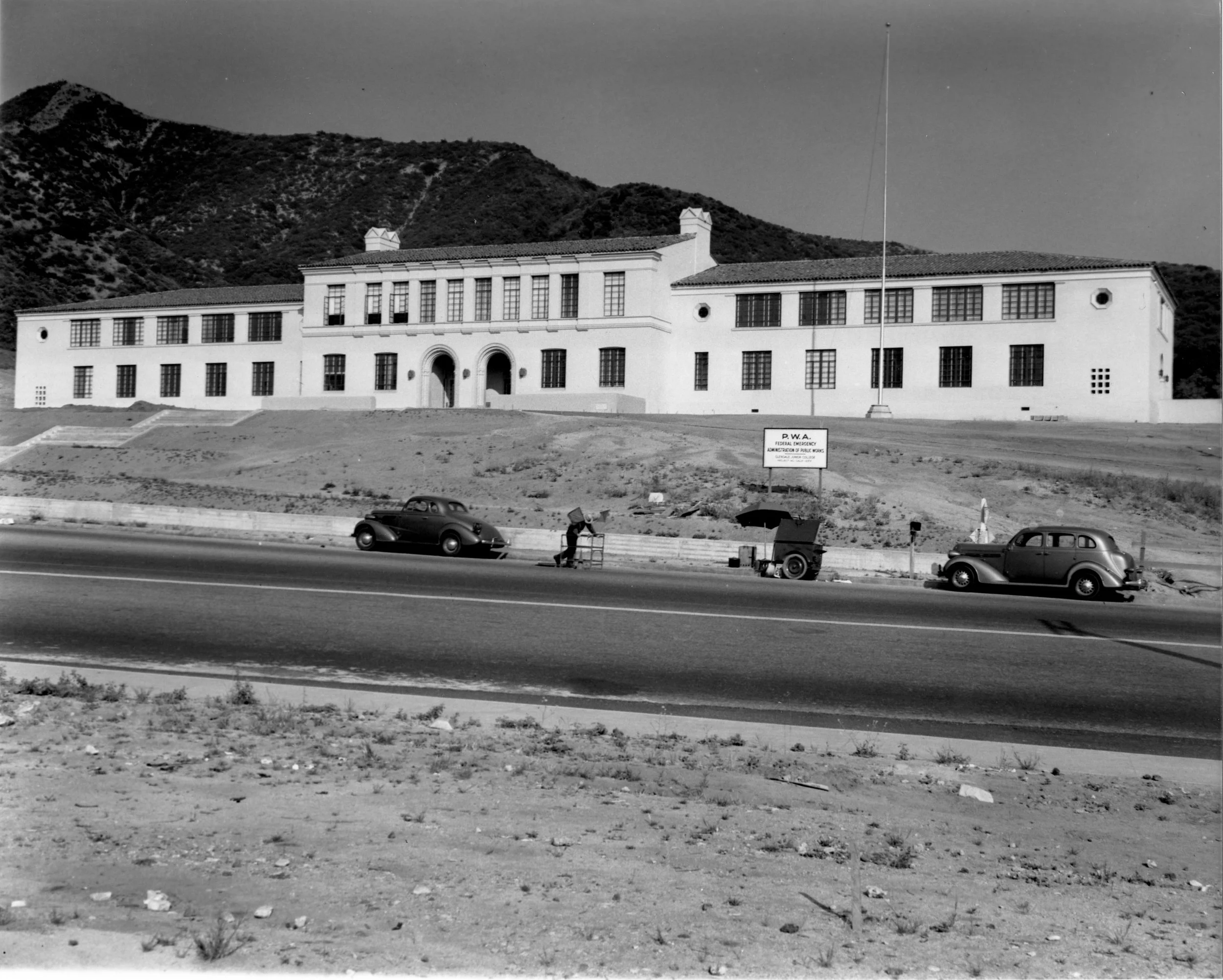
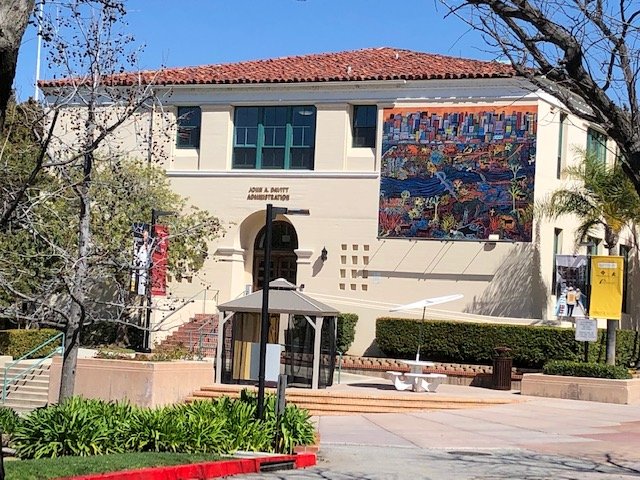
The following March, construction began on four structures: an administration building, a science building and locker rooms for both male and female students. Construction was completed in 1937. That same year, a student union was added, with the $16,000 cost divided equally between the district and the student body.
After extensive grading of the hilly site to provide athletic fields, the campus opened to students in May 1937. Note the PWA sign in front of the nearly completed administration building in the adjacent photo.
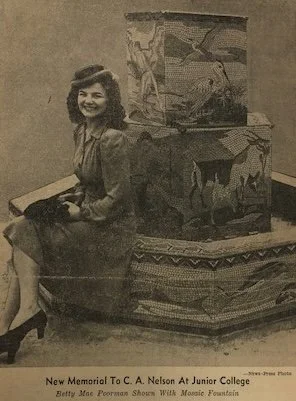
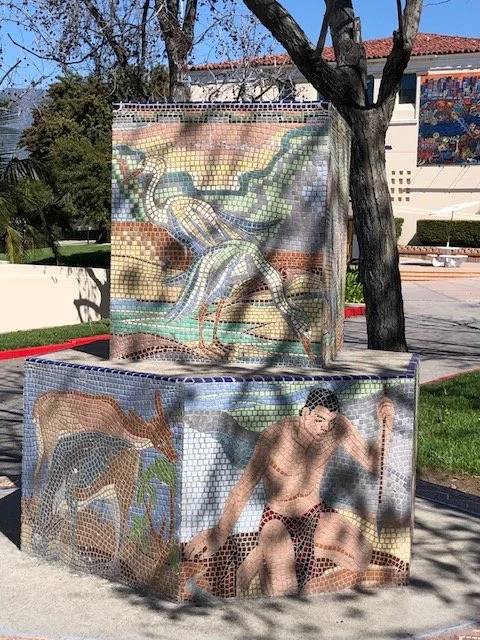
Federal funding was also available for campus artworks. With the help of community fundraising, several pieces - including a mosaic tile fountain - were erected. The fountain, with some 80,000 individual tiles, depicted examples of animal life. Designed and created as a Federal Arts Project (PAF), it was completed in four months and placed in front of the Administration Building.

Civic Auditorium and Plunge
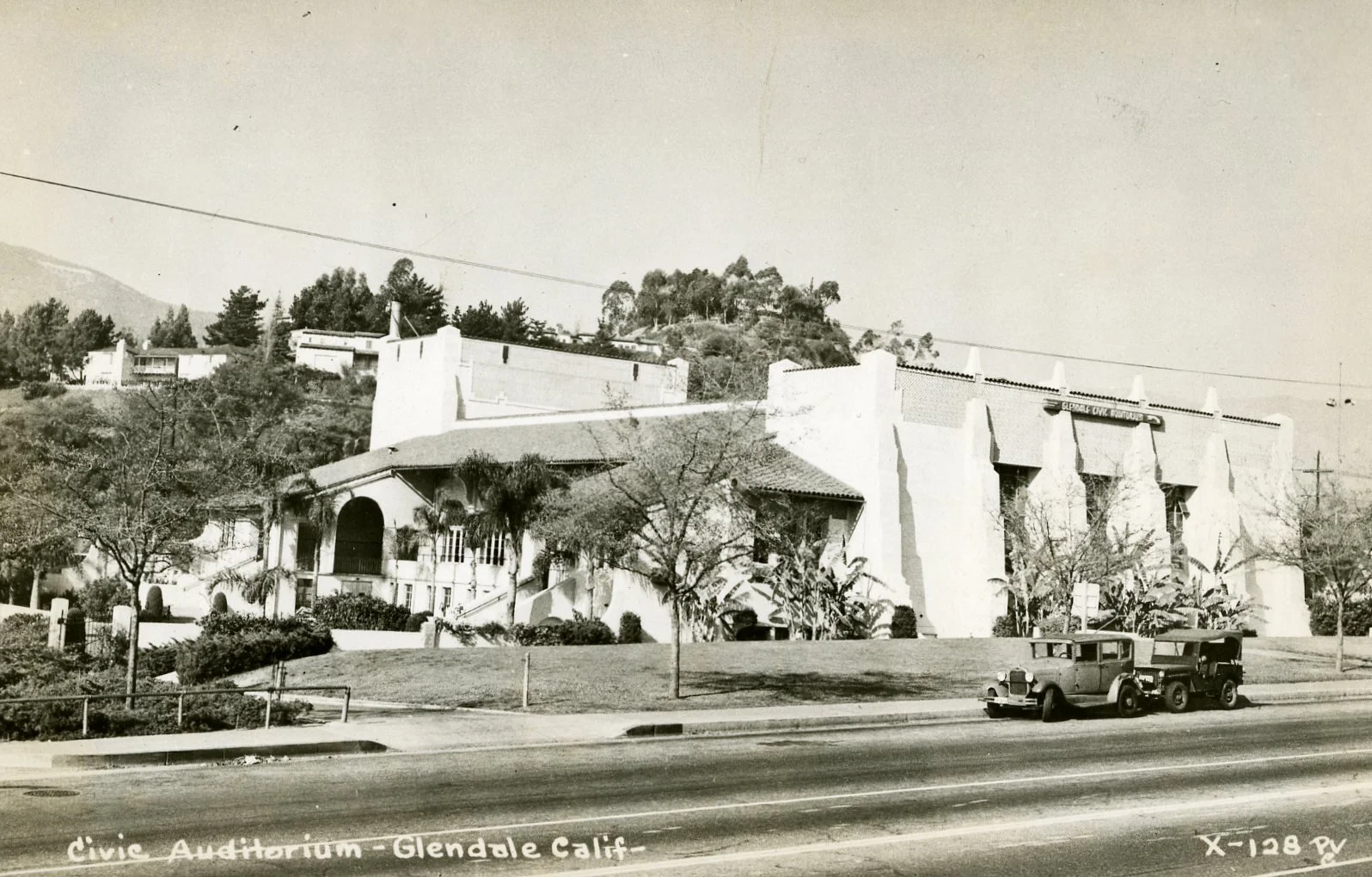
As college construction began, a proposal to use WPA funds for a municipal plunge and recreation building on the other side of the street was submitted to city council by the Parks and Recreation commission. Architect George Postle, who had designed Temple Sinai and several local homes, called for a plunge large enough to accommodate racing and diving meets. Depths would vary from 2 1/2 and 3 1/2 feet at the shallow end to ten feet at the deep end. The proposal also included a building for dancing and public gatherings, at an estimated cost of $35,000 to $60,000. J.A. Grundfor was designated as architect of a Spanish-style building with a tile roof.
The building and the pool were authorized as one WPA project to cost $81,376. Construction began on February 21, 1936. Another WPA application sought $73,804 for grading and landscaping, flooring on the lower level, retaining walls and sidewalks, bleachers for the swimming pool and a heating plant for the auditorium. Several issues delayed the recreation center, but the public demanded that the plunge be ready for summer swimming.
According to a Glendale News-Press editorial by Carroll Parcher, the city decided to spend a few thousand dollars out of its own funds to complete the job. This was done and the pool opened in the summer of 1937. A huge crowd, perhaps as many as 1,000 people, witnessed the dedication of the pool that June. Nearly 1300 children signed up for “learn to swim” classes. “This is a worthy project of the joint efforts of Glendale city officials and the WPA,” said Col. E. H. Wilcox, Southern California WPA official. “It is claimed that this is the finest municipal plunge in the U.S. It is my enthusiastic judgment that it is the best in the world.”
With the pool open, construction refocused on the recreation center, now referred to as the Civic Auditorium. Once completed, it became a popular dance venue. “Glendale finally is beginning to take advantage of its civic auditorium,” Parcher wrote in a 1939 column. “The Friday night community dances have been packing in the jitterbugs and even the more sedate dances and the federal theatre production of ‘The Mikado,’ sponsored by the Glendale Elks, drew a good house.”

The Verdugo Wash and Bridges
The Verdugo Wash begins in the mountains above the Crescenta Valley area and flows into the Los Angeles River near Griffith Park. Its entire path is within the city of Glendale, according to `The Living New Deal,’ website, which details public works projects created during the Roosevelt Administration.
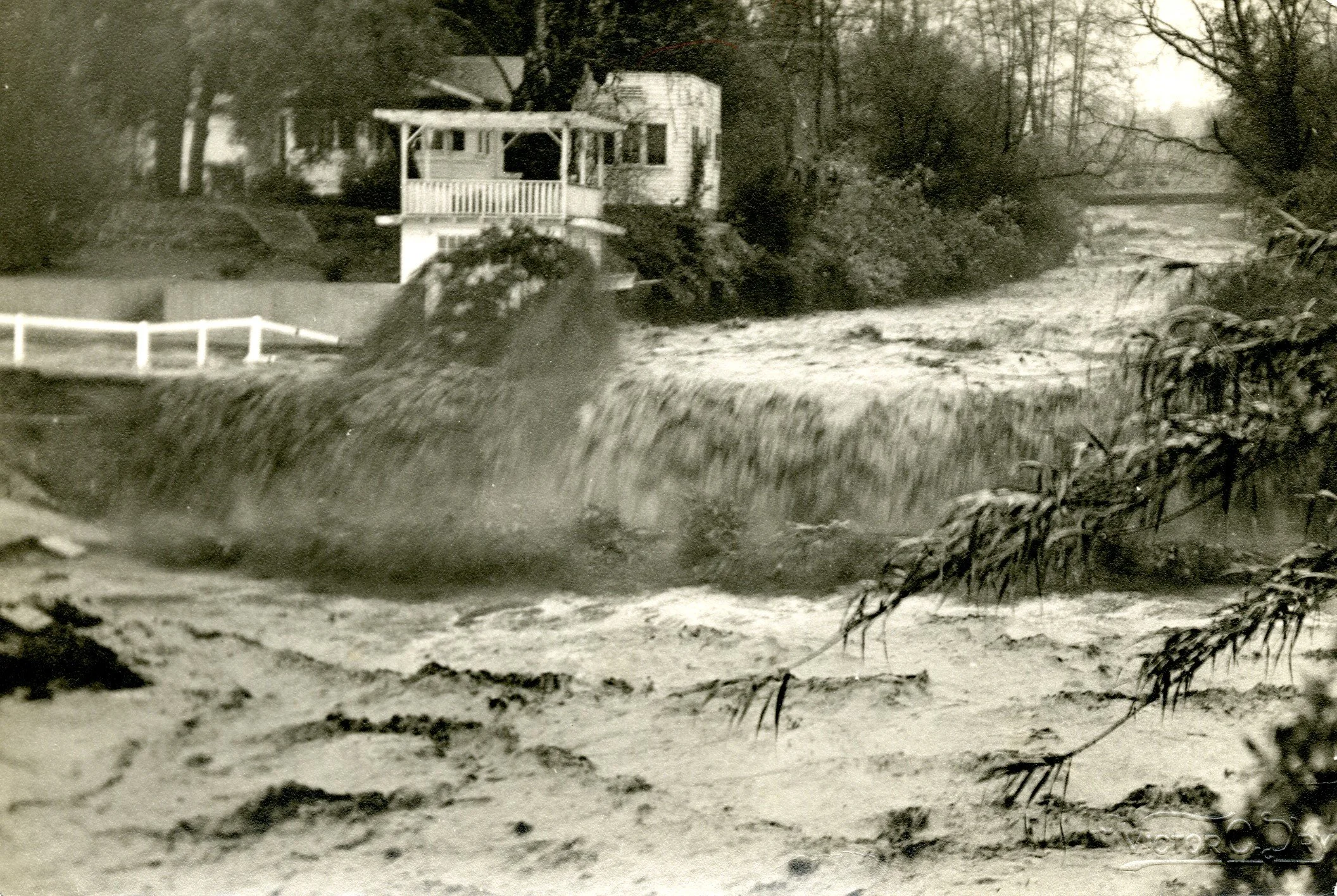
Much of the wash was still in its natural state when heavy rains began on the last days of December 1933. The storm sent water and debris down the steep slopes of the San Gabriels, which had been severely burned that summer. The debris flowed into Montrose and La Crescenta, through the Verdugo Woodlands and towards the river. The flood took out many bridges and homes. Electricity and telephone services were cut, so some residents along the wash were unaware of what was happening. Several lives were lost.
E.C. Eaton, the County Flood Control District’s chief engineer at the time, estimated that 600,000 cubic yards of debris came down in just twenty minutes. He called for completion of a flood control system.
A six-mile concrete channel was constructed by WPA crews under Army Corps of Engineers supervision between 1935 and 1937, according to `The Living New Deal’ website. Along with the flood channel, several bridges were erected with federal funding.
The Kenilworth and Mountain Street bridges were among the first to open to traffic in 1936. The Kenilworth Avenue Bridge is one of Glendale’s three historic Vierendeel-designed bridges. The other two are the Glenoaks Boulevard Bridge and the Geneva Street Bridge, which opened in 1937 and 1938, respectively.
Wabasso Way flooding
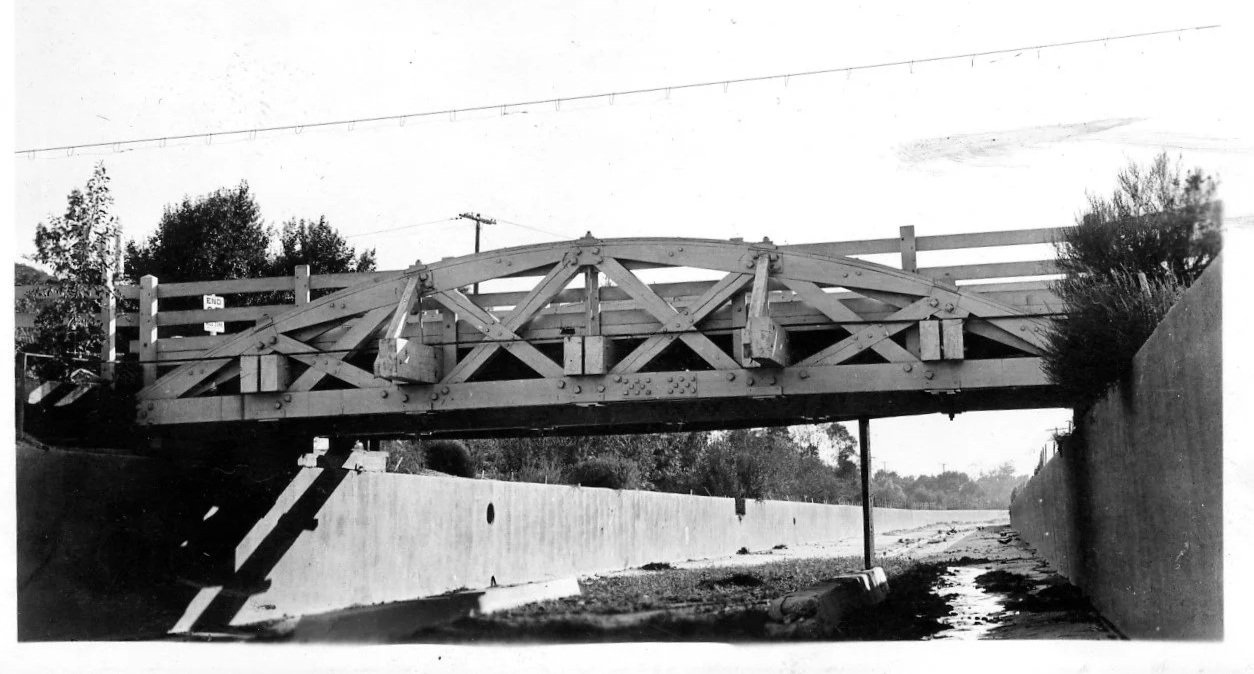
Mountain Avenue Bridge
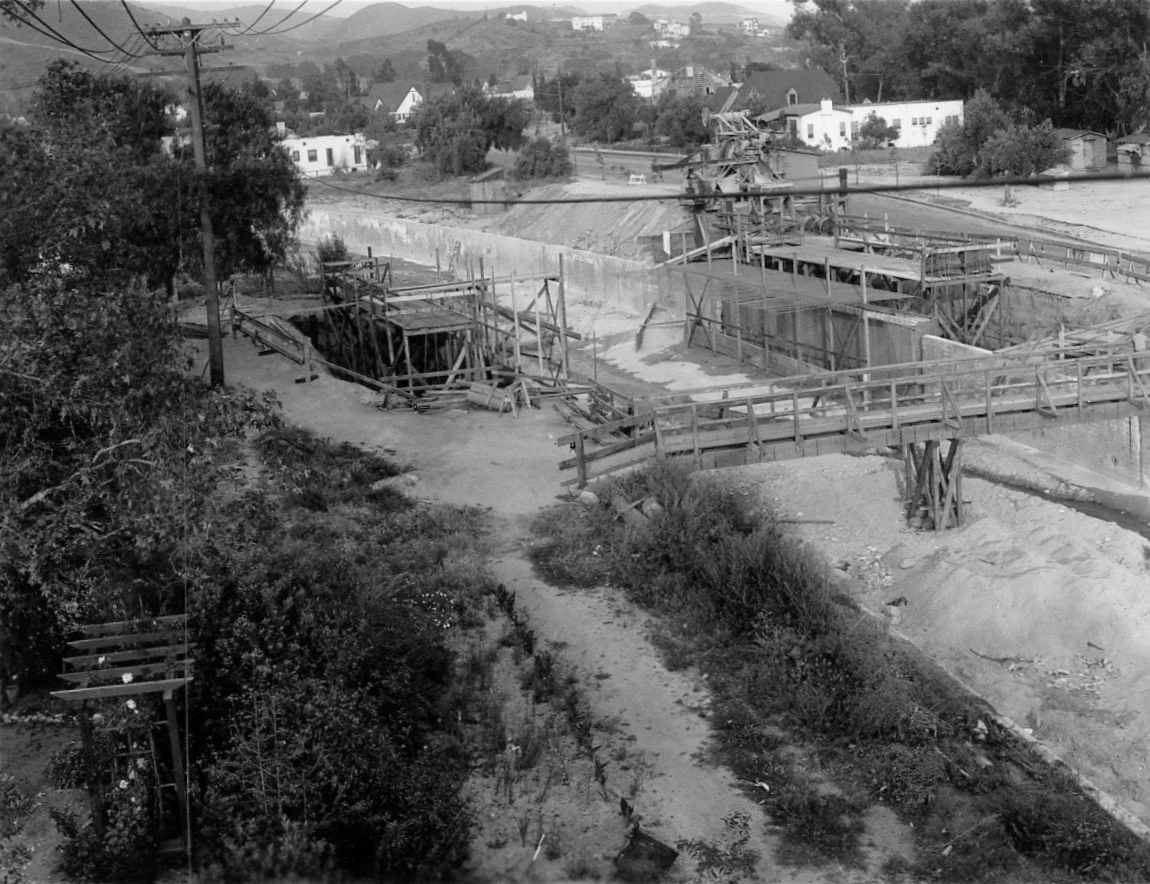
Geneva Street Bridge under construction
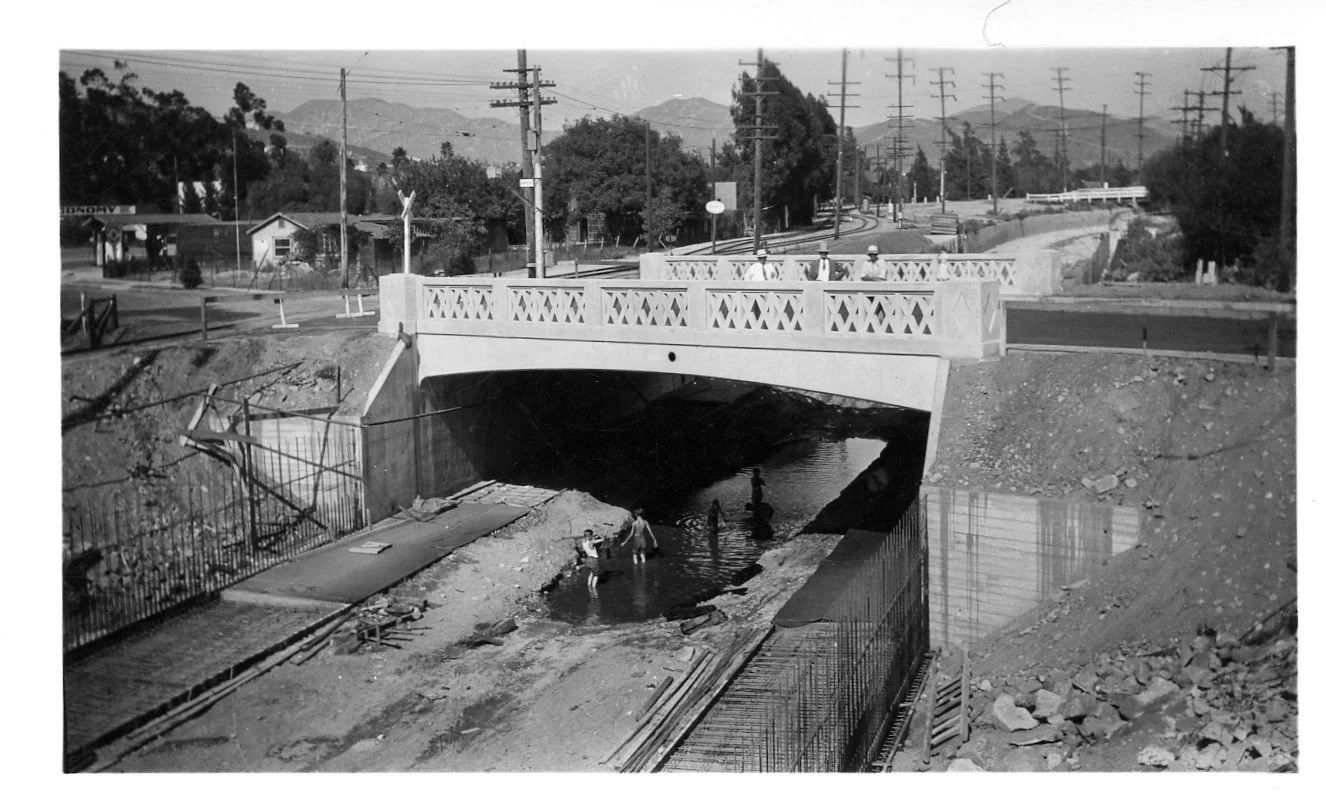
Central Avenue Bridge
City Hall
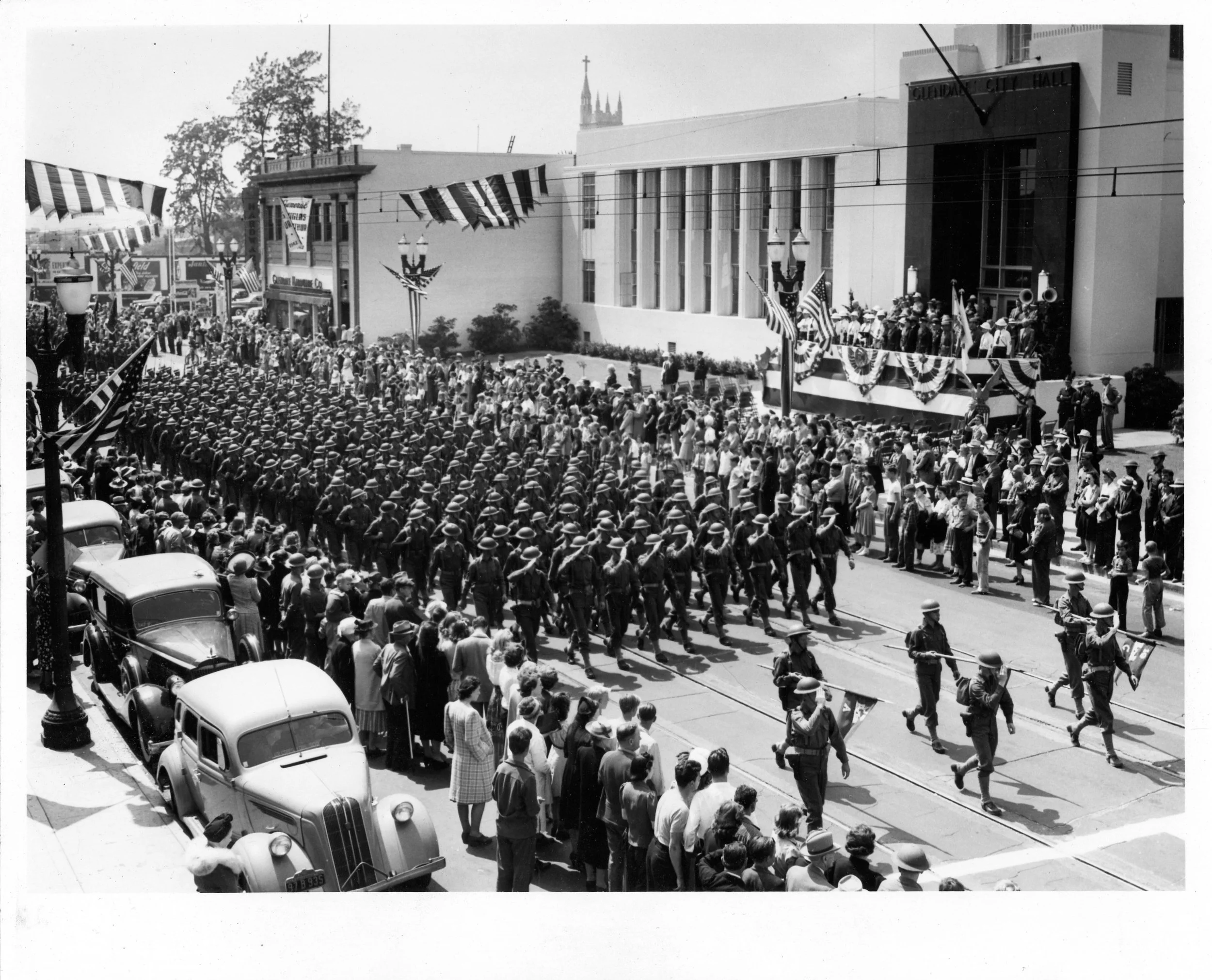
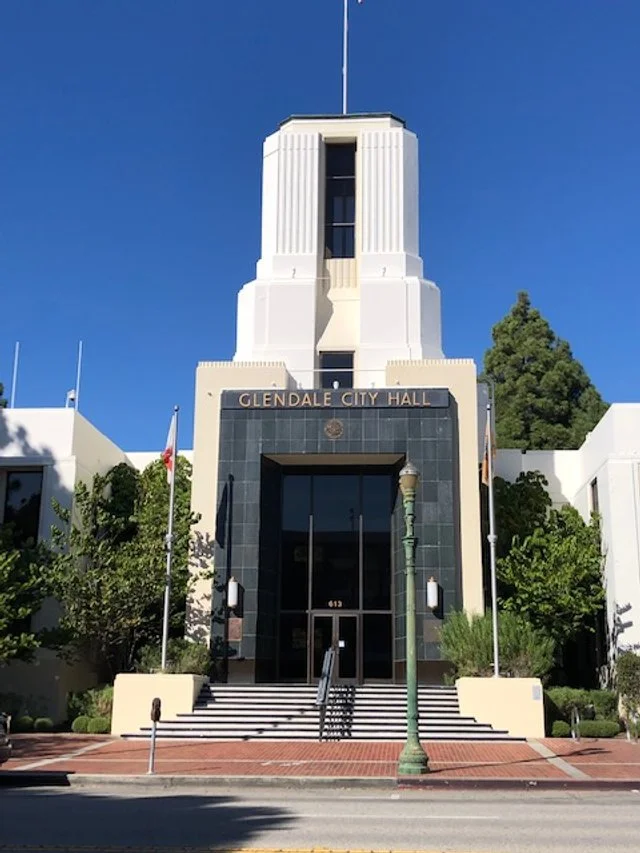
Another WPA project took place in the civic center. The old city hall, built in 1912 on Broadway, was torn down and a new one, designed by local architect Alfred Hansen in what became known as the WPA Moderne style, was built on the same site. It was constructed in three sections. The first, the east wing, held the Administrative offices. It opened in September 1941.
The Legislative unit, in the west wing, was finished in October and the central section the following April. The entire building was dedicated after a MacArthur Day Civilian Conservation Corp parade in the spring of 1942. Pictured are 19th Regiment of Army Engineers marching in front of Glendale City Hall.
Still Standing After All These Years
Photos by KPYamada
Glendale Community College
The administration building still stands, along with the much modified tile fountain, now located near the San Rafael Building.
Civic Auditorium
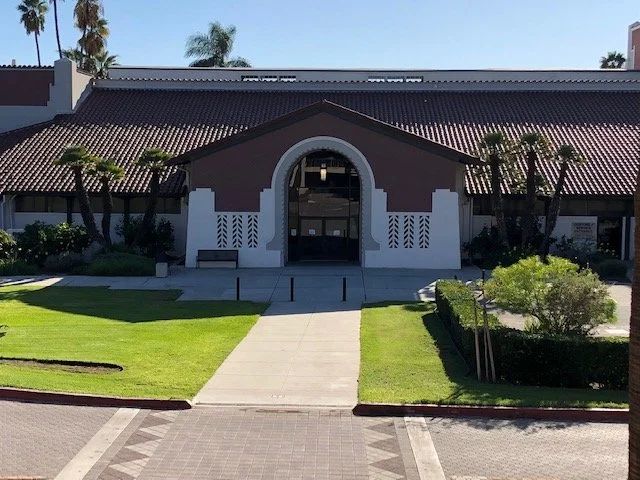
The Civic Auditorium, which has had extensive alterations over the years, is in constant use by organizations and community groups, according to the ‘Living New Deal’ site.
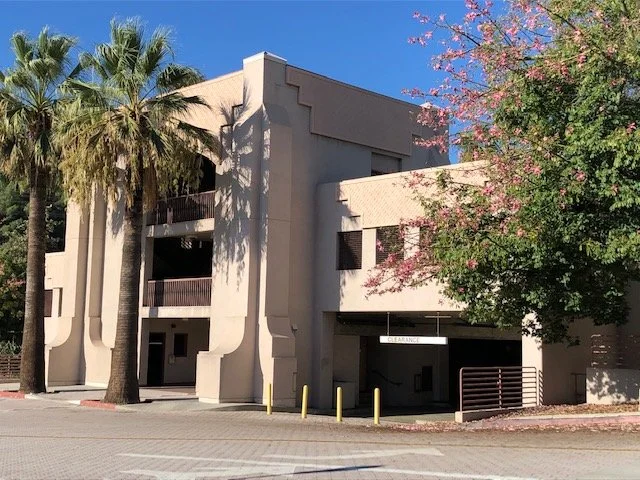
The much-loved swimming pool, open for twelve weeks each summer, was demolished in 1987. According to an article in the Los Angeles Times, the pool leaked 2,000 gallons of water daily and had to be constantly refilled. A parking structure - on the site of the old pool - was constructed in keeping with the auditorium.
Verdugo Wash and Bridges
The wash and the bridges remain in constant use.
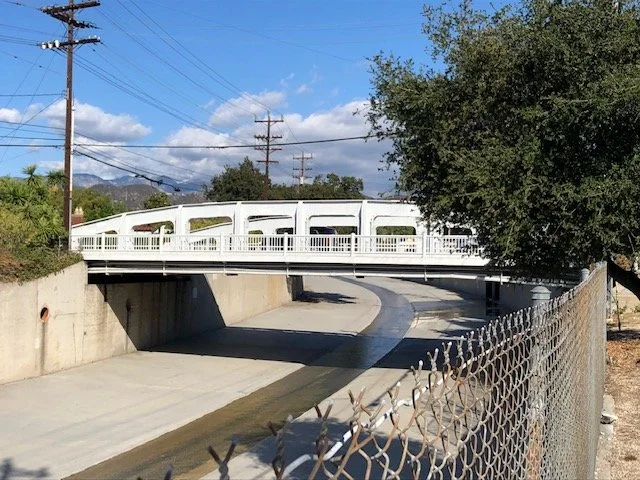
Geneva Street bridge
City Hall:
This building was extensively remodeled in 1978. A two-story addition was built on the north side of the east wing for executive offices and conferences rooms. The central lobby was also changed.
Resources
The Glendale History Room, on the second floor of the Central Library, has city directories dating back to 1906, photographs of early Glendale, and archival collections on the Glendale Unified School District, Forest Lawn, theaters of Glendale and other Glendale-related topics. Visits are by appointment only (please email glendalehistoryroom@glendaleca.gov)
Our local history was studied extensively by early historians, including John Calvin Sherer, who authored ‘History of Glendale and Vicinity’ in 1922. Carroll W. Parcher incorporated much of that information in `Glendale Community Book,’ published in 1957. A later version, ‘Glendale Area History,’ was published in 1974 and expanded in 1981. Unless otherwise noted, much of what is included here is from these books and from “Glendale, A Pictorial History.”
Other Resources
Glendale News Press: August 20, 1935, November 13, 1935, May 26, 1936, February 22, 1940, January 13, 1938 - On the Level, Carroll Parcher, March 11, 1939, On the Level -Carroll Parcher, Verdugo Views, July 12, 2017
https://www.latimes.com/archives/la-xpm-1987-06-11-gl-6393-story.html
https://livingnewdeal.org/sites/civic-auditorium-glendale-ca/
Much more on the Living New Deal in Glendale on: https://livingnewdeal.org/us/ca/glendale-ca/