
Still Standing After All These Years
Part 17: Glendale College 1926; The Greys, The Long Beach Earthquake, Tent City and New Campus
By Katherine Peters Yamada, February, 2026
Photos from Glendale History Room unless otherwise noted
Glendale Community College, soon to celebrate its 100th year, traces its origins to a local couple with several children.
According to Carroll Parcher, writing in Glendale Area History, a woman he identified only as a Mrs. Grey wrote a letter to the Glendale Union High School District Board of Trustees. In the letter, dated May 10, 1926, Mrs. Grey suggested the trustees form a junior college. That way, local high school graduates could find higher education close to home.
At the time, Glendale had a number of elementary schools, but just one high school. Union High had been inaugurated in 1901 and held its first classes in rented rooms at the former Glendale Hotel at Broadway and Isabel. The photo below was taken several years before, when the former hotel was occupied by St. Hilda’s Hall, a private Episcopal-run girls school.
By late 1902 students were meeting in a small building at Brand and Broadway. Just six years later, in 1908, a larger high school opened on Harvard. By the 1920s, due to the city's rapidly increasing population, more space was needed. So, an even larger high school was built on Broadway. It opened in 1924. (See Part 7 for more info.)
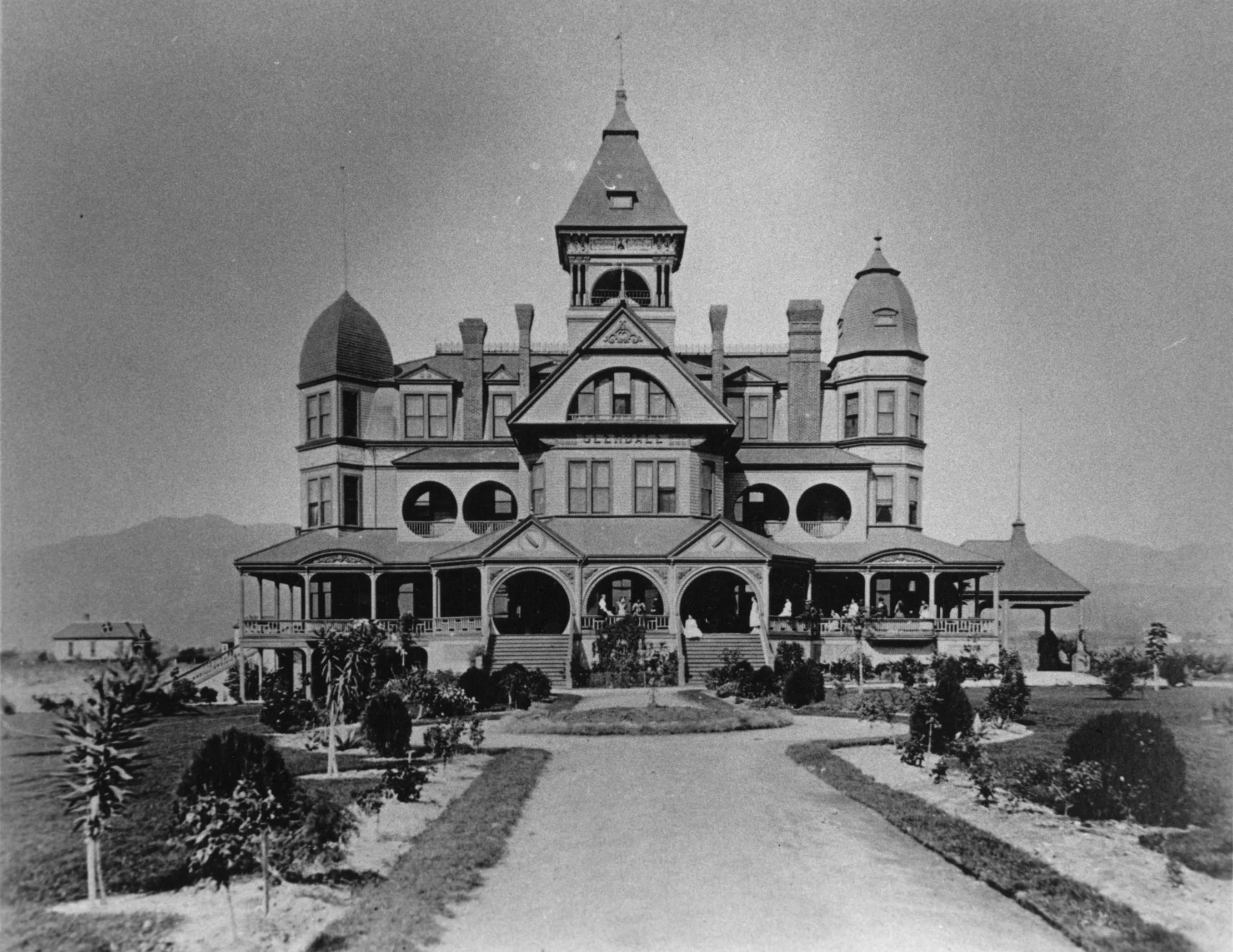
1901 Union High
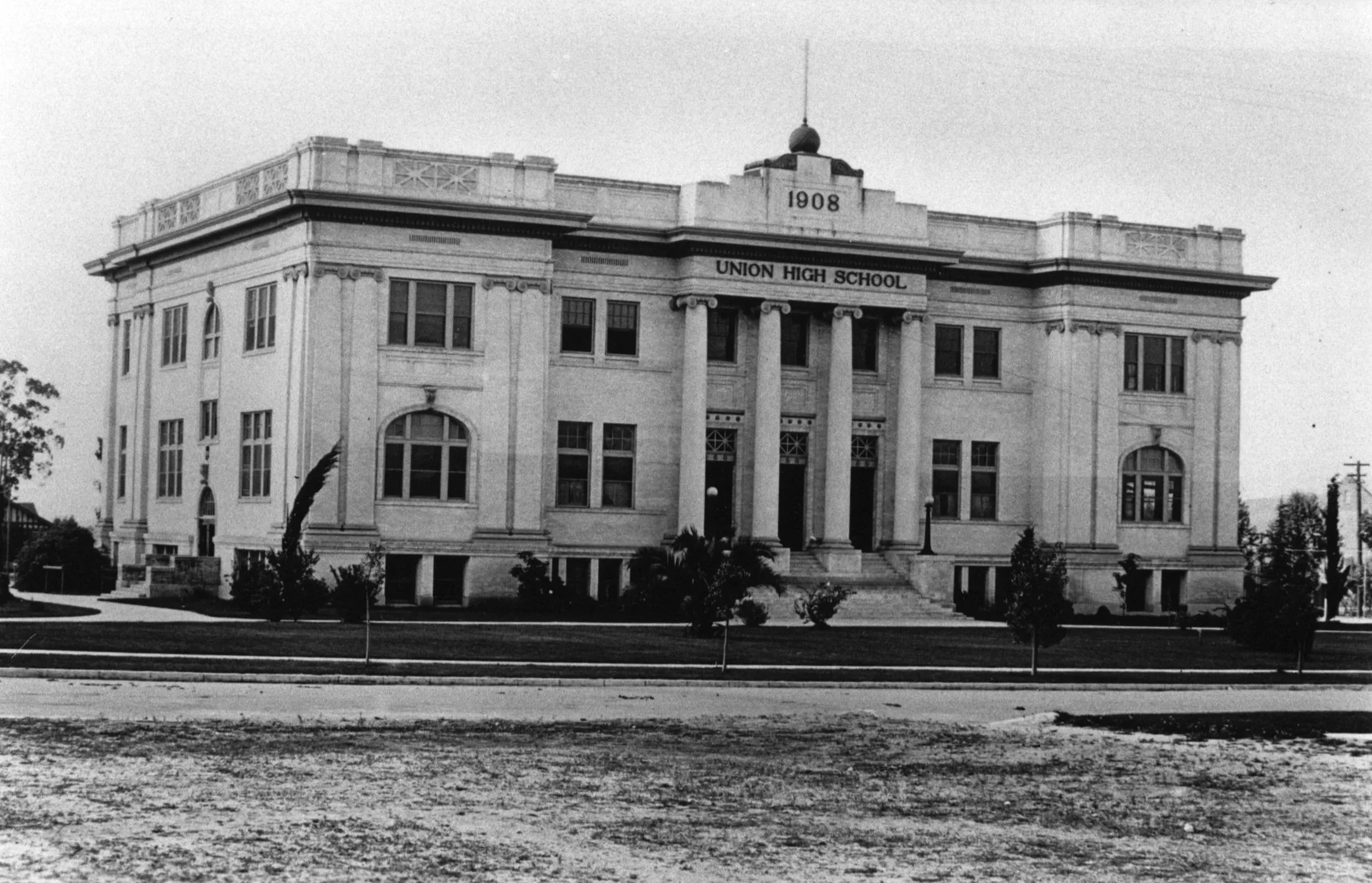
1908 Union High
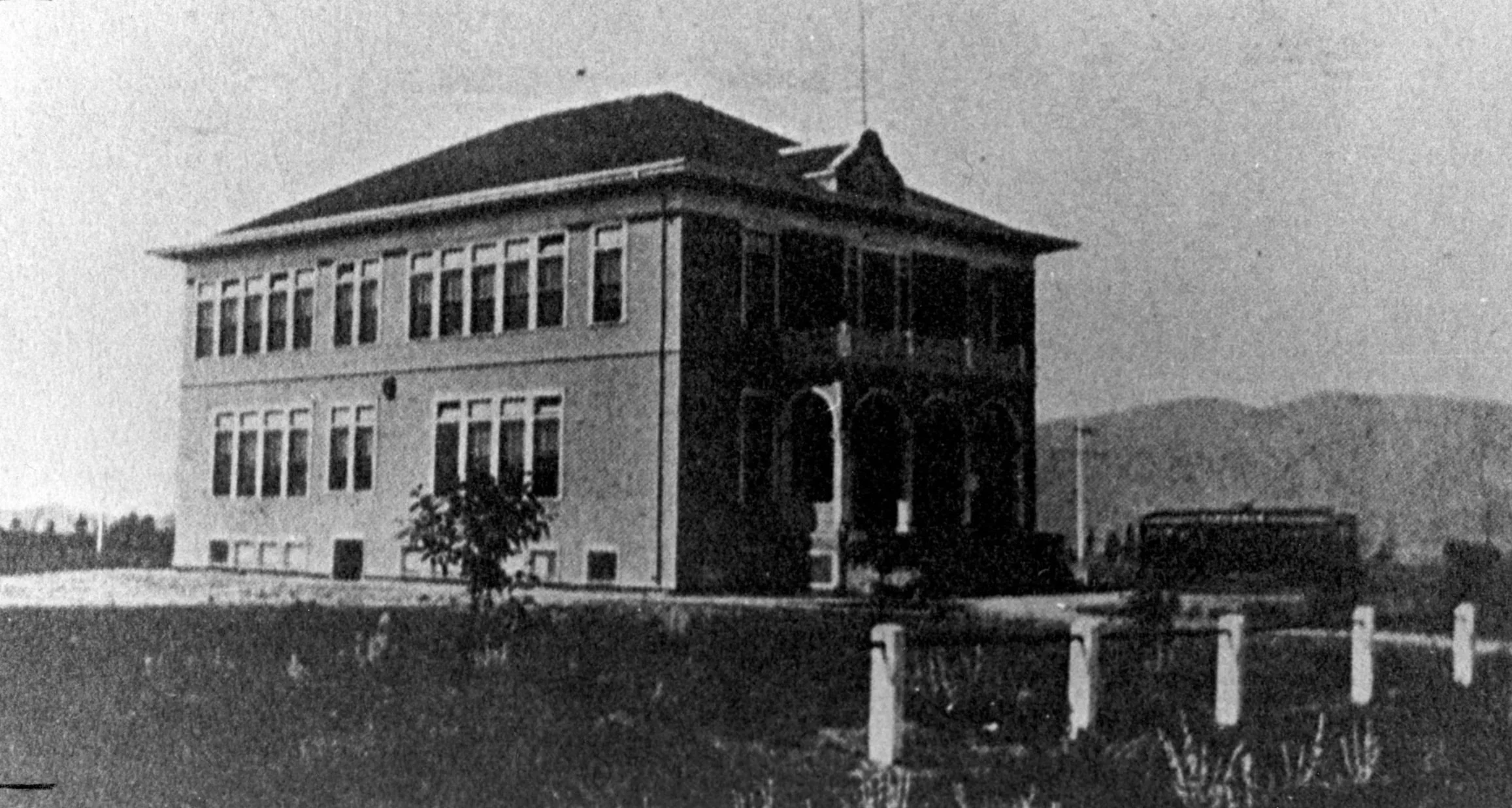
1902 Union High
1924 Glendale High
Proposal to Open a Junior College
Two years after the new high school opened on Broadway, Mrs. Grey (who has since been identified as Caroline Grey) wrote her letter. Parcher noted that the idea was taken seriously by the trustees.
But, it seems, not seriously enough. Or quickly enough. So, her husband, John R. Grey, turned to the newly formed Lions Club, of which he was a member, for support. (The Glendale club had been chartered just the year before, on January 22, 1925, with William Cap’ Kelly as first president.)
A few days later, Grey, now representing the Lions Club, visited the board of trustees in person. According to an account in the Glendale News Press, he pointed out that Glendale was growing and that the local branch of the University of California was moving “towards the beach,” making the need for at least two years of local college education more important than ever.
This time, the trustees embraced the idea and launched a plan to establish a junior college course on the high school campus on Broadway. Furthermore, two board members were appointed to investigate the possibility of opening a separate junior college.
More support came just a few days later when George V. Moyse, Glendale Union High’s principal, (Learn more about him in Part 7) spoke at a Lions Club meeting at the Glendale Hotel. “A junior college would be a very valuable asset,” he said.
So, who were these residents who were so concerned about the welfare of college age students in Glendale?
John and Caroline Grey
Let's start with the letter writer, Caroline A. Grey, a native of Halifax, Nova Scotia. As noted in her 1956 obituary, she and her husband had ten children, five sons, George, Stuart, Alan, John and David, and five daughters: Carolyn Grey, Kathleen Crane, Marian Grey, Eleanor Parkhouse and Jean Abel.
A 1911 newspaper account noted that the Greys were building a house at 1891 Sycamore Avenue (later Doran Street) for their family. They attended First Methodist Church in Glendale.
John Robert Grey, a native of Ireland, made his way to the U.S. as a young man, settling in Glendale. A 1922 Glendale Evening News account reported that J.R. Grey Realty, at 124 North Brand, was developing a large tract (then known as Roland Square) between Doran and Patterson streets, just west of Kenilworth. A few buildings that had been on the property had been removed and it had been subdivided into more than 100 lots. Sidewalks and curbs were laid and the streets were paved.
Grey also made it possible for the city to secure part of the tract, at a reasonable price, according to the newspaper account, for a park. It was initially called Fremont Park, then later became Patterson Park and, very recently, renamed Fremont Park.
The Greys’ Proposal Accepted by Board of Trustees
Later that May, the board took steps to secure approval for a JC from the state and county and from the voters in the high school district.
In October, John Grey proposed a $1 million dollar bond issue to fund several facilities and projects. It also included $50,000 to remodel and equip the outgrown high school campus on Harvard to fit the needs of a JC.
The next February, a petition was filed in the office of Mark Keppel, LA County’s superintendent of schools, seeking to establish a JC. It was quickly approved.
Local voters also approved and a new JC district was established in the spring of 1927. The proposed boundaries were nearly the same as the high school district.
All of the high school's trustees were elected as board members of the new JC and Moyse took on the additional role of JC principal without increased pay. Ethel Hume Flood Moyse, his wife, became the dean of women; she was also unpaid. Elmer T. Worthy was named acting dean.
Glendale Junior College Opens in 1927
The new JC opened in the fall of 1927. Since the Harvard Street remodel was not complete, classes were held in the west wing of the high school on Broadway. Rent was $2000 a month. Worthy announced that 95 JC students had registered by opening day.
There were some adjustments to be made: campus social life centered around the high school students. Their class schedules remained unchanged, so JC classes were scheduled late in the day. Even so, JC students were often moved from one classroom to another, depending on availability.
The first JC student body president was William Rogers Brooke, who had played baseball at Glendale Union for three years, graduating in 1927. Spencer Robinson, of Salt Lake City, was elected vice president.
Students from the Business English class were recruited as writers and editors of the Broadcaster, the JC’s weekly paper. The first edition was published that September. The student body, which by now numbered 125, included one member from Peking, China and another from Panama. Merrill Miller was the first editor of the yearbook, The Log.
The JC was still on the Broadway campus when the second year began. As an increase in enrollment was expected, 70 courses were offered.
Three study programs were available:
A junior certificate program to prepare for a 4-year college or university
A diploma course leading to a diploma after 2 years
Vocational, also a two year program
JC Moves to Harvard Campus in 1929
In the fall of 1929, the JC was relocated to the newly remodeled Harvard campus; with the college paying rent of $30,000 per year. Some 434 students registered that fall.
A course in aviation was offered in late 1929, reflecting a need to teach young men to assemble a plane, repair defective motors and learn the commercial side of flying. Although the course was not meant to teach them to fly a plane, a large response was expected, according to the GNP.
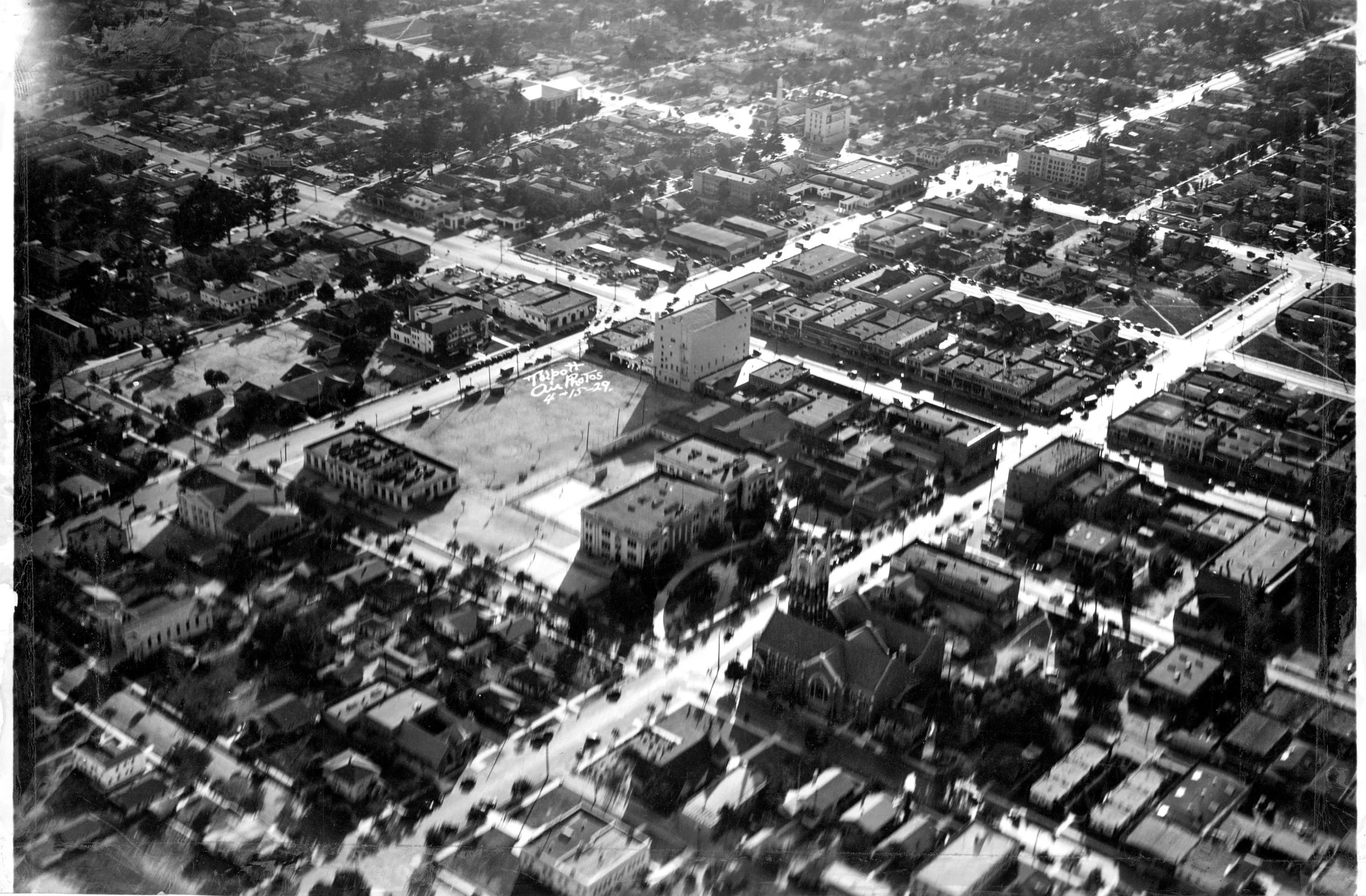
John Grey Runs for City Council
In 1929, three years after the Greys’ proposal to open a new junior college was accepted, John Grey ran for Glendale City Council, opposing the increasing costs of city government and unnecessary assessments. He did not win that election, but he ran again in 1931 and won, serving four years. A 1935 bid for reelection was not successful.
1933 Earthquake Destroys Structures
A 6.4 earthquake occurred late in the afternoon of March 10, 1933. As noted in Wikipedia, the epicenter was offshore, southeast of Long Beach. It was felt as far away as the San Joaquin Valley, the Owens Valley, and northern Baja California.
More than 115 people died and damage was widespread throughout Southern California. School buildings were among the structures that incurred the most severe damage. Casualties from the 5:54 p.m. quake could have been much higher if it had struck during school hours. According to Wikipedia, it "highlighted the need for earthquake-resistant design for structures in California. More than 230 school buildings were either destroyed, suffered major damage, or were judged unsafe to occupy."
"Large sums of money were needed to upgrade those damaged school buildings. Thirty days after the earthquake, Governor James Rolph Jr. signed the Field Act, mandating that new designs be based on high-level building standards adopted by the state."
Tent City
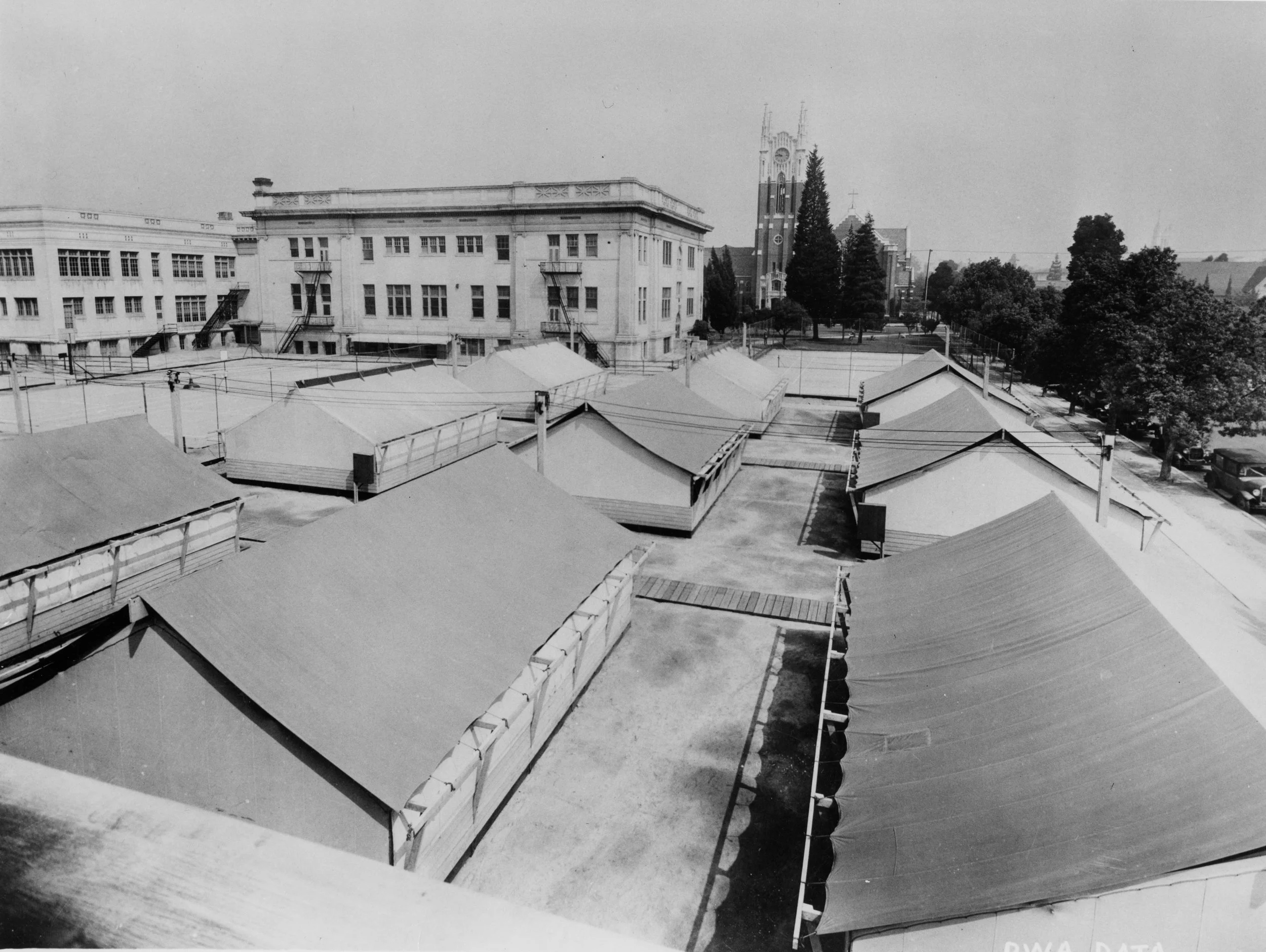
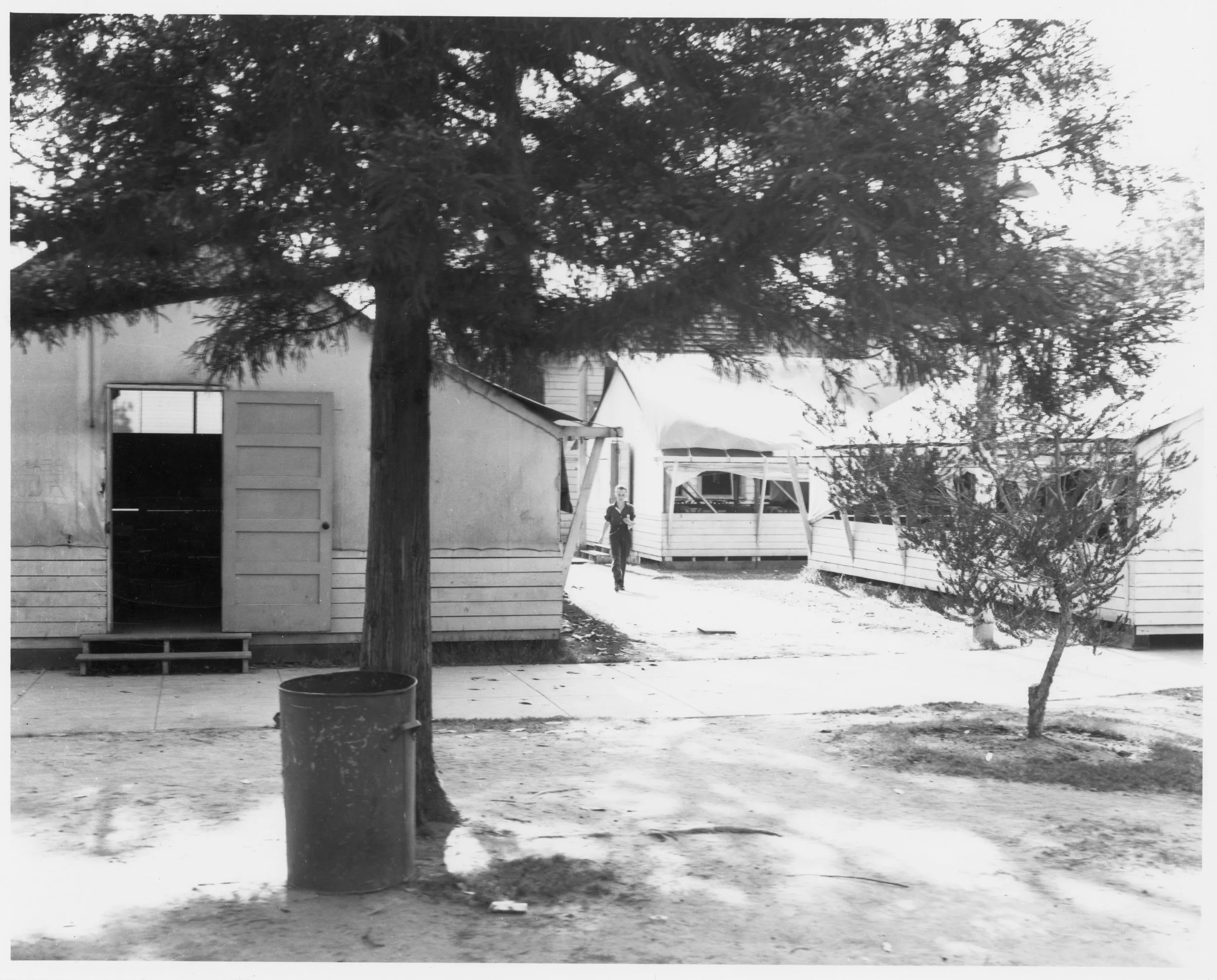
Because of the widespread damage, many schools erected tents to serve as temporary classrooms. Here in Glendale, damage to the Harvard campus was so severe that several buildings were condemned; fifteen tents were needed to replace them. The work was done by Glendale contractor D. A. Loomis, at a cost of $5017. Heat was provided by Hamel Radiator Co, which delivered 15 units at $22 each.
Classes were held in tents for three years. According to an account by GCC communications professor Mike Eberts, the "Tent City" featured "unbearable heat in the summer months, with equally unbearable cold and dampness in winter."
It wasn't all grim, though. The tents were linked by a network of boardwalks, which apparently encouraged some students to roller skate from class to class.
And alumnus Chester Lynch quipped in a 1957 account, "Going to classes in tents had advantages. If you were not particularly interested in what your instructor was saying, you could listen to the instructors in the tents on either side two or three over if you wished."
But, students and faculty wanted to get back into real classrooms. According to Eberts, the earthquake and subsequent tent city were the impetus to build a brand new junior college campus. However, a bond issue for $160,000 failed in 1934.
1935 Bond Measure For New Campus
In 1935, another bond measure - this time for $195,000 to build a new campus on North Verdugo Road - was issued; to be built with local and federal money.
As noted by Eberts, that year’s student body "displayed more school spirit ... than any year before or since. Every student worked to put the bonds across, and it is to every member of this class that all succeeding classes owe the Verdugo Campus."
The measure carried by a citywide vote of 7705-1848 on October 5, 1935, with the understanding that a 45 percent grant would be provided by the Public Works Administration, PWA.
After the votes were counted, the students staged a gigantic snake dance through the main streets of Glendale, followed by a bonfire on the campus, which over a thousand local residents attended.
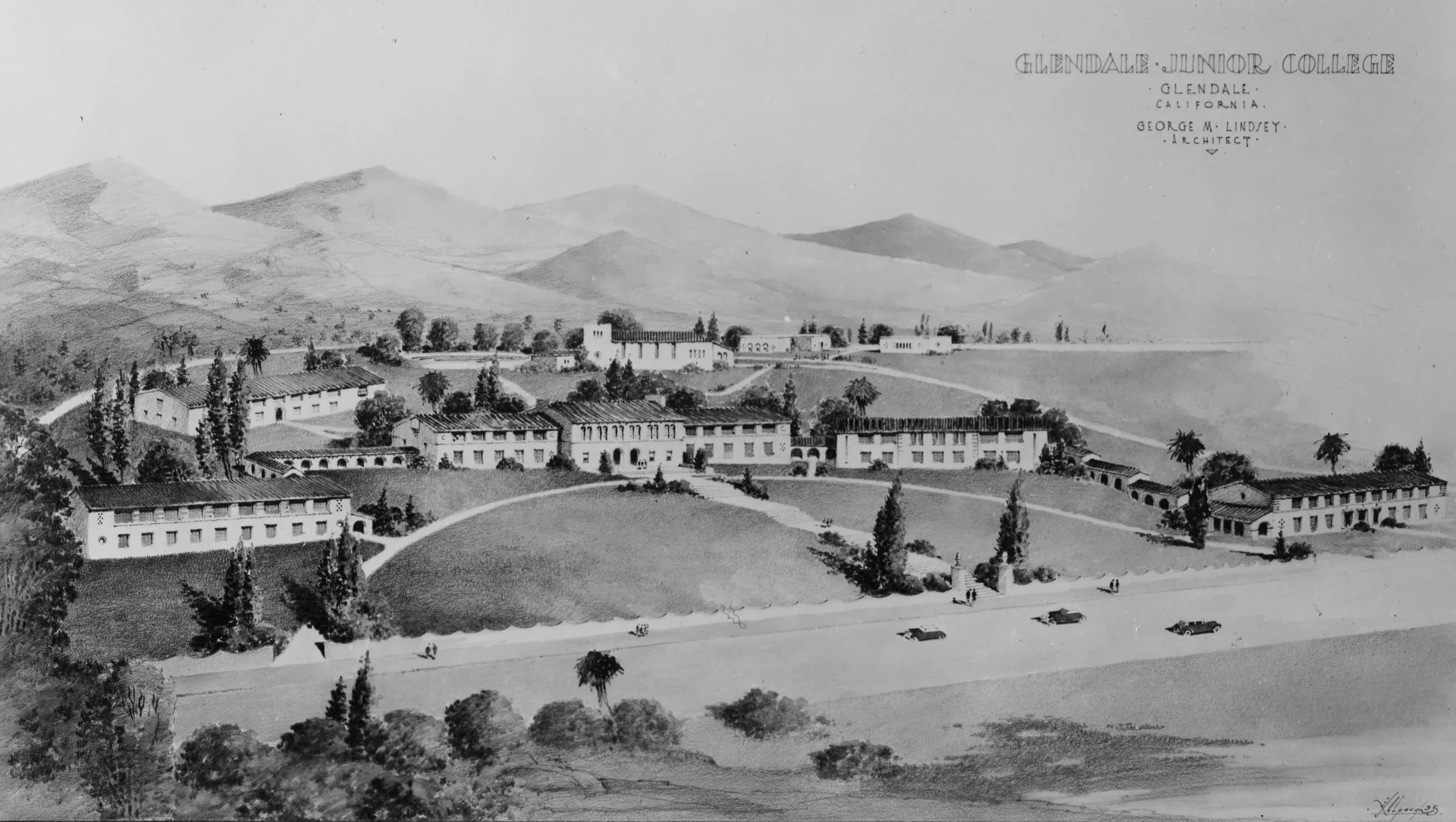
Architect George M. Lindsey
Tentative approval was given to a floor plan prepared by George M. Lindsey, a licensed architect based in Glendale, according to John Calvin Sherer, author of History of Glendale and Vicinity. Sherer noted that Lindsey had graduated from Polytechnic High School in 1909 and joined the architectural office of W. J. Saunders, of Los Angeles, then one of the region's leading architects. "There he remained for two years and received excellent training and experience."
Lindsey was the first person hired as architect and engineer for the Los Angeles Board of Education. After one year, he left to take a course at the University of California. Then he returned to the LA Board of Ed for three years. After a stint in Detroit, Michigan, he returned to Glendale, opening an office in a bank building at Glendale and East Broadway. He often worked with John C. Austin, of Los Angeles, one of California’s leading architects and construction companies. They were the architects and engineers for the 1924 high school on Broadway.
Lindsey was a Knight Templar Mason and belonged to the Glendale Chamber of Commerce, and the Glendale National Exchange Business Men’s Club. The family resided in a new home on North Harvey Drive.
But, then, suddenly, bad news from Washington. According to information supplied by Eberts, John T. Cate, business manager for the Glendale Board of Education, had been sent to D.C. to make a personal appeal to the PWA on the school's behalf.
Cate reported that the PWA had only about a third as much money as it had requests for. Furthermore, the Doran and Hoover High auditorium projects had previously been approved by the PWA, which meant that the PWA was already doing a lot for Glendale.
The Bd of Ed was to meet that night to formally call for a bond election for $195,000 of local bonded indebtedness.
Despite the telegram from Cate saying the chance for $155K in PWA money for the GJC project was "very remote," the board moved forward, setting the date for October 15. That was the latest that the bond election could be held and the project could get underway within the president's time limit. The school board wired the PWA, telling them of the desperate need for a JC in Glendale and that the students were attending classes in tents.
Cate was soon back in Glendale (after a 14-hour flight). Things had changed and he was now confident that Glendale would get the PWA funds. He reported that "the government's primary concern is to put men and women to work who are not already employed or assigned to other projects." He believed that many of the other projects vying for PWA funds would be tripped up by the wage and deadline requirements.
Another break in GJC's favor was that President Roosevelt had given Secretary of the Interior Harold Ickes jurisdiction over the PWA grants. Ickes was known to favor education-related building projects. Meantime, a dirt road was created on the proposed site so that the public could view it for themselves.
Project Moves Forward
A 25-acre site, with 1200 feet fronting on Verdugo Road, was purchased for $20,000. A bid to construct four buildings was received for $299,495. The contractors were Whittaker and Snook of Pasadena.
Suggestions for the design included ‘modern’ and ‘Spanish,’ with many favoring a Spanish style similar to the planned recreation hall and plunge to be built across Verdugo Road. A Spanish Monterey style was adopted by the Bd of Ed and an official request for $159,000 was sent to Secretary Ickes. The GNP noted that its status was unknown for several days. “Only the fact that President Roosevelt ordered that work must start by December 15, 1935 has kept everyone concerned moving ahead.”
Which is it? PWA or WPA?
“Alphabetical Projects Confused by Uninitiated”
PWA is Public Works Administration
WPA is the Works Progress Administration
Each is a federal organization financed out of the same fund. They are meant to provide work for the unemployed. Secretary of Interior Ickes is head of PWA.National Relief Administrator Hopkins heads the WPA, which can undertake a public work without any funding in place.WPA efforts were much more extensive than PWA and frequently credited with PWA projects. Recently a junior college in Glendale was referred to as a WPA, but in reality was a PWA project. (Los Angeles Times, March 22, 1936)
Public Works Administration (PWA)
According to Wikipedia, the Public Works Administration was formed to build "large-scale public works such as dams, bridges, hospitals, and schools" and to provide employment, "stabilize buying power, and help revive the economy."
"The PWA spent over $7 billion on contracts with private construction firms that did the actual work. It created an infrastructure that generated national and local pride in the 1930s and is still vital nine decades later." The PWA was much less controversial than its rival agency, the Works Progress Administration (WPA), headed by Harry Hopkins, which focused on smaller projects and hired unemployed unskilled workers.
From Ground breaking to Laying of Cornerstone
In February 1936, Cate announced ground breaking ceremonies for the first four structures. Mayor L.E. Olson and council members were invited, along with Dwight Stephenson of Glendale, assistant state director of the PWA; and W.A. McKesson, deputy county council.
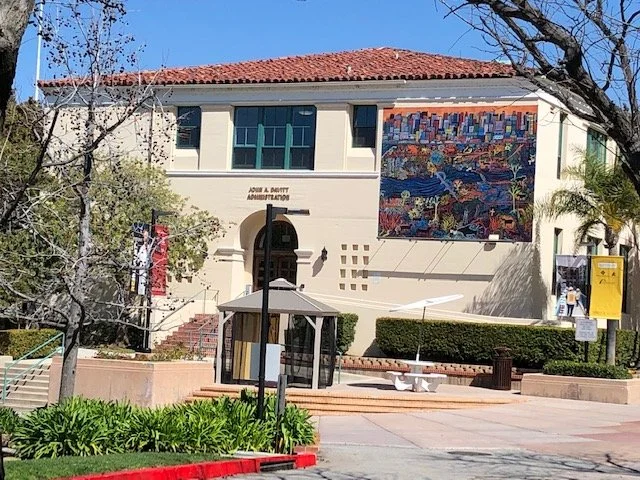
After the ceremonies, construction officially began on the two main structures: a two-story administration building containing offices, 21 classrooms and a library, along with a two-story science building with offices, 12 classrooms and labs. Plus, 'boys and girls locker rooms' and tunnels for steam pipes and other utility connections. The four structures were expected to be ready by the first of February 1937.
In April 1937, just over a year after construction began, GJC celebrated its 10th anniversary - combined with a student event, ‘Pioneer Day’ - by installing the cornerstone. Invites were sent to several dignitaries, including W.C. Hammatt, assistant state director, PWA.
Judge W. Turney Fox, chair of the Citizens Executive Committee, led the ceremony and Rev. J. Whitcomb Brougher, Jr., pastor of First Baptist Church, gave the dedication prayer. Dr. Norman R. Whytock, superintendent of schools, spoke on the junior college as an institution for service, followed by a dedication address by USC's fifth president, Dr. Rufus B. von KleinSmid. Three former student body presidents assisted in the ceremony: William Sanders, Sterling Livingstone and Ted Robinson.
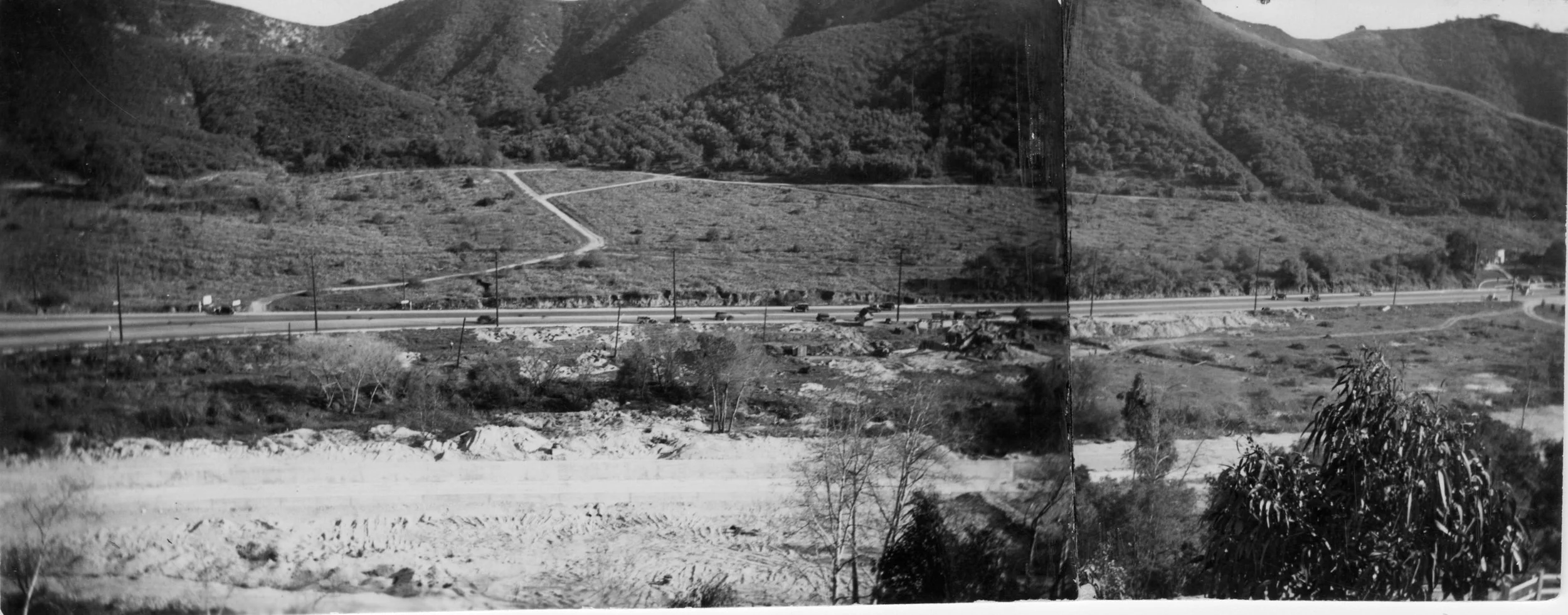
Future site of Glendale College
Construction Completed that May
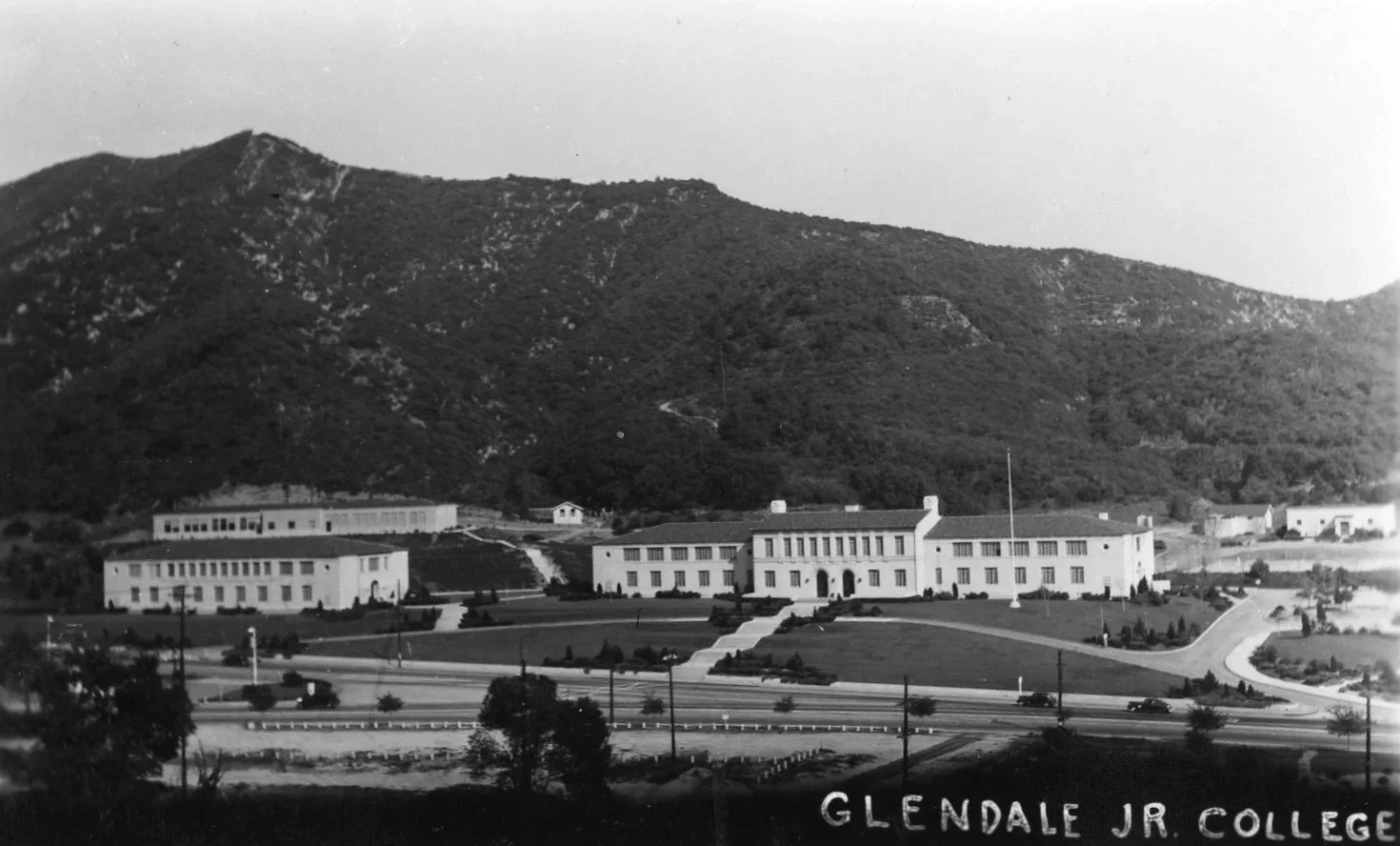
The buildings were finished and the hillside had been graded to provide athletic fields when the new campus opened in May 1937. That same year, a student union was added, with the $16,000 cost divided equally between the district and the student body.
Eberts noted that new campus brought other changes: the Buccaneer became the Vaquero and the student newspaper and yearbook were renamed El Vaquero and La Reata. School colors were changed from orange and black to maroon and gold by vote of the student body. Songs, yells and names of clubs were changed.
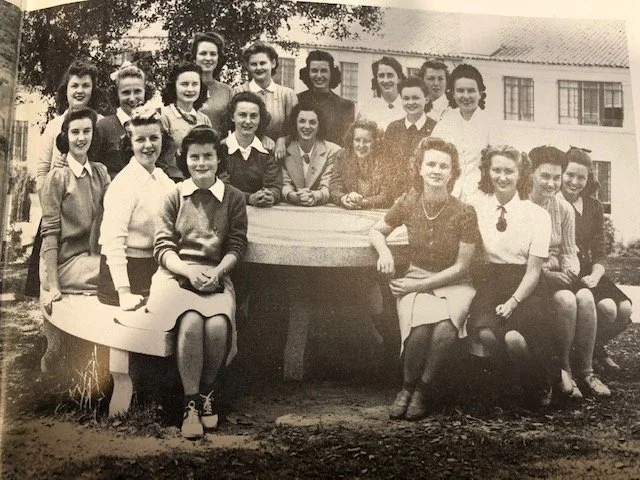
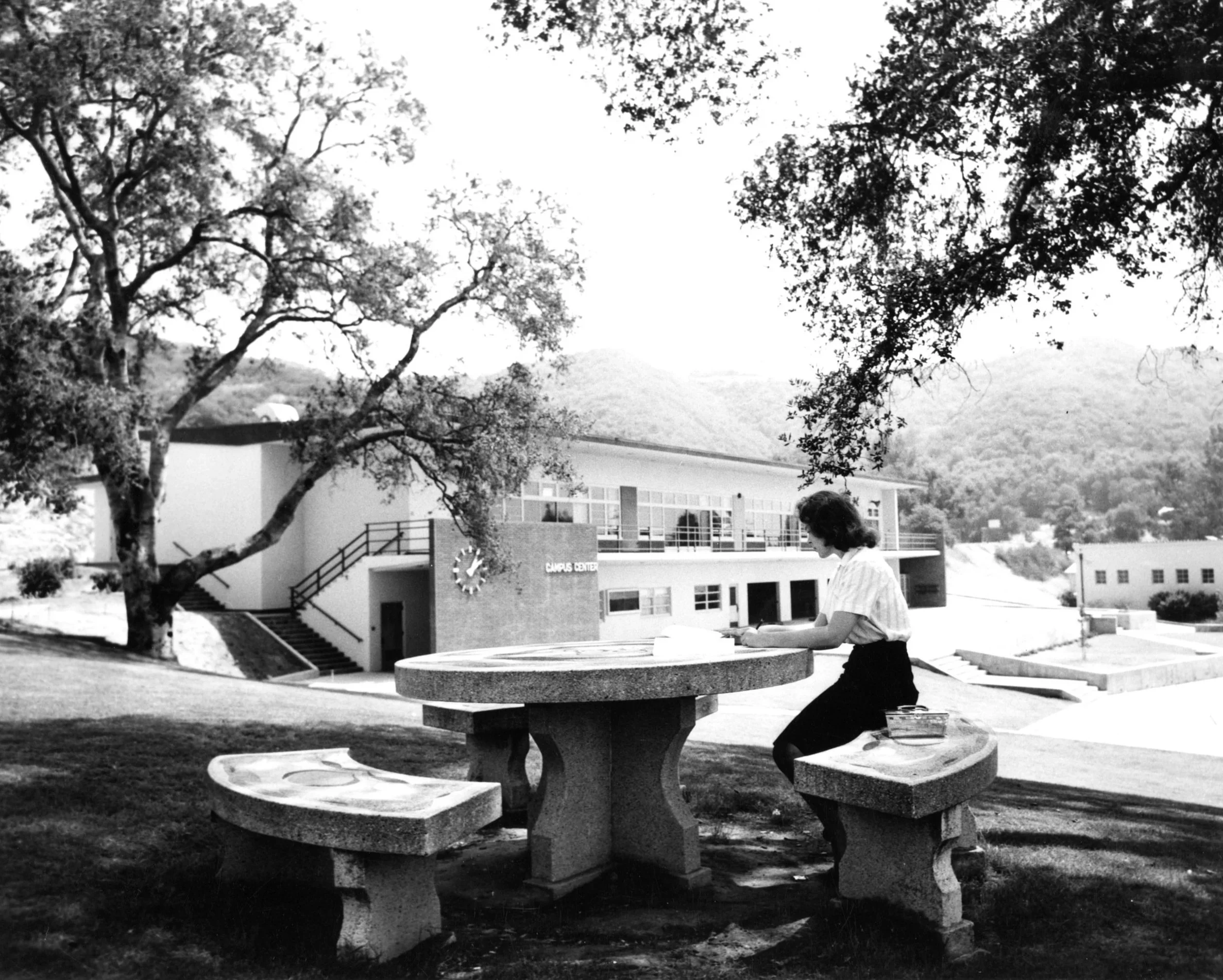
Round petrachrome tables and semicircular benches, created by Jane Mussy under the auspices of the WPA Federal Art Project provided seating.
Alice Ross Livsey, president of the Glendale Art Association, led fund raising efforts for campus statuary. According to a May 1939 news account, more than 30 residents, representing women’s clubs, service groups and other community organizations, joined together to raise $1500 in order for the federal government to supply statuary with an estimated commercial value of more than $12,000.
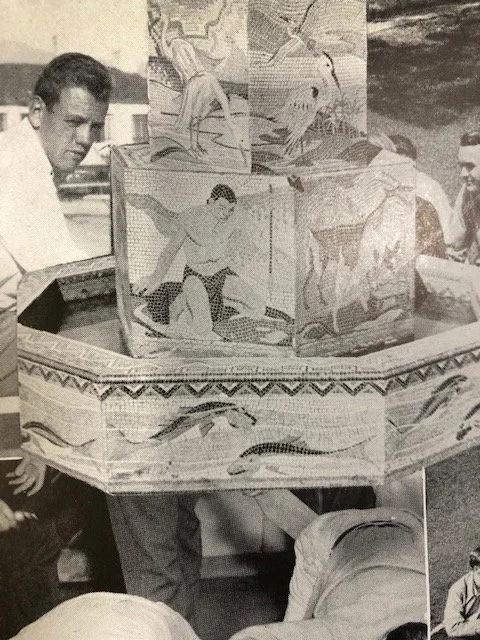
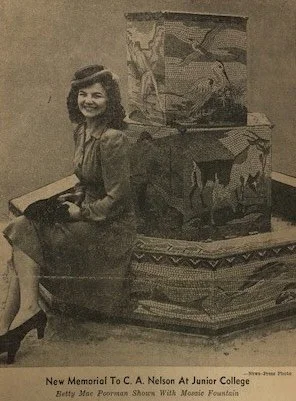
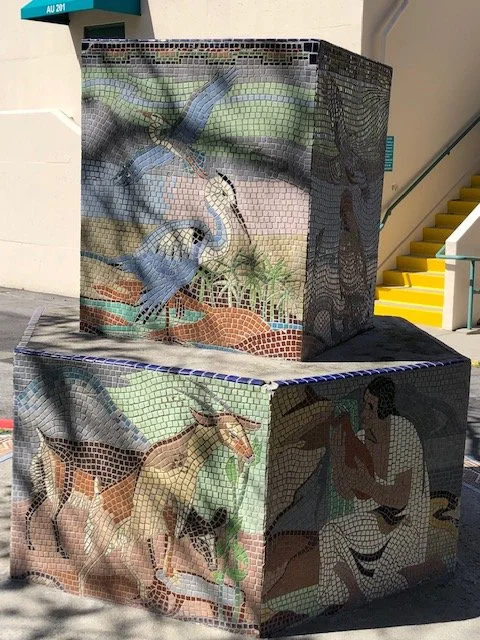
One of the first installations was a mosaic tile fountain. The design, inspired by the Director of College, C.A. Nelson, was built as a memorial to him after his sudden death. According to a Living New Deal website, the fountain, completed in February 1940, was symbolic of life on land, in the sea and in the air and included many examples of animal life. Designed and created as a WPA fine art project, and using 80,000 individual tiles, it was four months in the making. A $400 fund for materials was donated by the classes of ’38 and ’39. The fountain was placed in front of the admin building.
Still Standing After All These Years
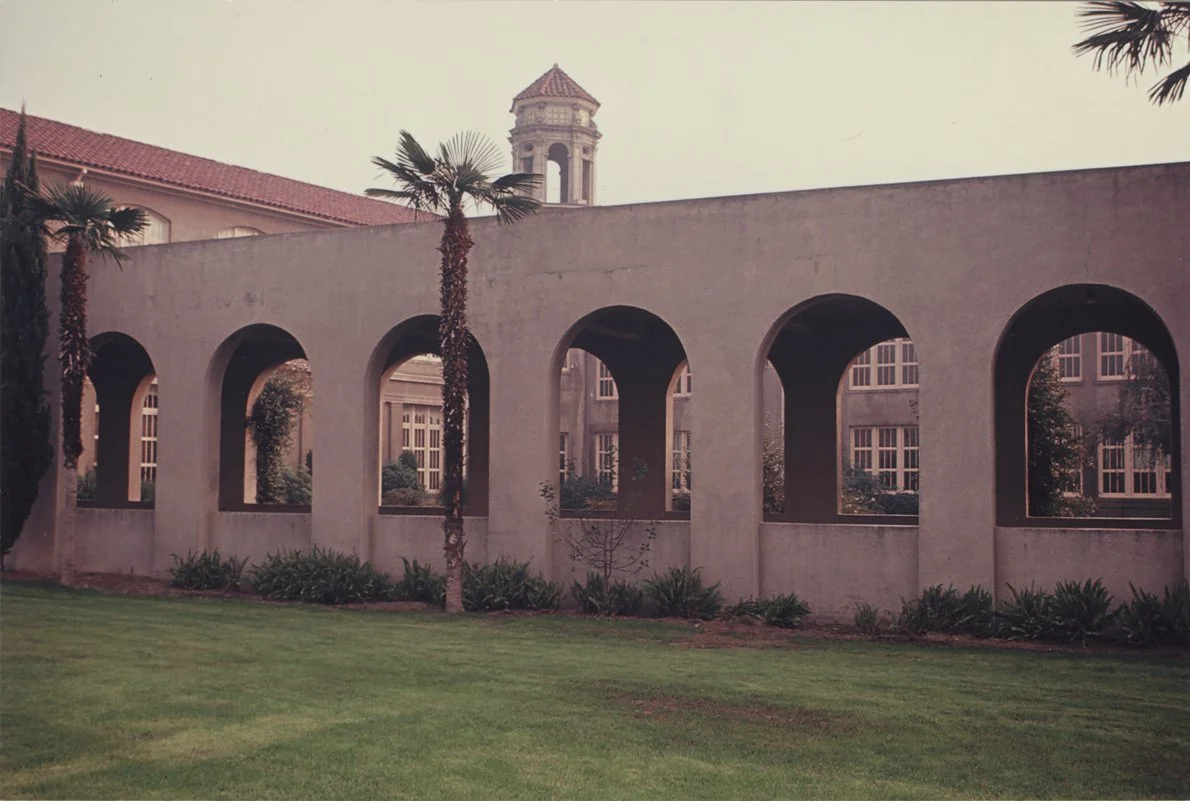
Photos by KPYamada
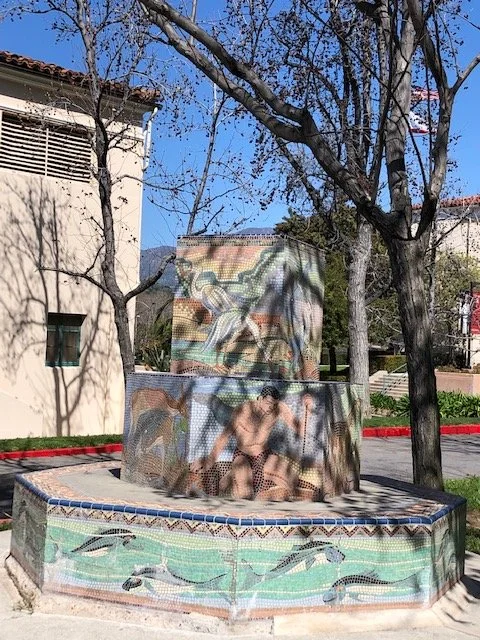
Little remains of those original buildings and art installations. Only the admin building still stands, along with the much modified tile fountain, now located near the San Rafael Building.
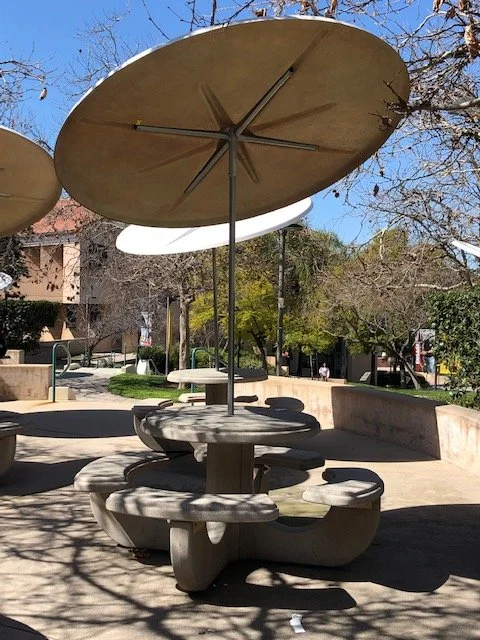
None of the original tables have survived to present day, although replicas can be seen throughout the campus.
The old Harvard Street site was sold to the city for $50,000. The condemned buildings were demolished and the site cleared and converted into Central Park. It is now home to Glendale Central Library.
In 1936, the Glendale Junior College District dissolved, becoming a part of the Glendale Unified School District. The school was renamed Glendale College in 1944.
In 1980, separate boards were reestablished, with a new board of trustees solely responsible for the governance of the Glendale Community College District, as noted in Wikipedia.
Resources
The Glendale History Room, on the second floor of the Central Library, has city directories dating back to 1906, photographs of early Glendale, and archival collections on the Glendale Unified School District, Forest Lawn, theaters of Glendale and other Glendale-related topics. Visits are by appointment only (please email glendalehistoryroom@glendaleca.gov.
Our local history was studied extensively by early historians, including John Calvin Sherer, who authored History of Glendale and Vicinity in 1922. Carroll W. Parcher incorporated much of that information in Glendale Community Book, published in 1957. A later version, Glendale Area History, was published in 1974 and expanded in 1981. Unless otherwise noted, much of what is included here is from these books and from Glendale, A Pictorial History.
*For more information about the Doctors House or to purchase the Labor of Love or Glendale, A Pictorial History, contact Glendale Historical at info@glendalehistorical.org (or phone 818-242-7447) with your request and a return email or telephone number.
Other Resources
Mike Eberts, Glendale Junior College, The First Decade, included in Society of Southern California Quarterly, Vol 82, No. 4.
Chester B. Lynch, June 1957, A History of the Glendale Public Schools from 1879 to 1957, with Emphasis on School Organizations and Administration
Glendale Evening News
October 20, 1927
Glendale News Press
May 14, 1926,
May 5, 1928
June 14, 1929
September 17, 18, 19, 1935
November 13, 1935
February 27, 1936
May 26, 1936
April 3, 1937
April 6, 1937
December 26, 1939
February 22, 1940
Los Angeles Times
March 15, 1936
March 22, 1936
History of Glendale and Vicinity by John Calvin Sherer. The Glendale Publishing Company, c. 1922, F. M. Broadbooks and J. C. Sherer. Pages 457-458.
https://livingnewdeal.org/sites/glendale-community-college-c-a-nelson-memorial-fountain-glendale-ca/
https://livingnewdeal.org/sites/glendale-community-college-petrachrome-benches-glendale-ca/