
Still Standing After All These Years
Part 18: The Glendale Fire Department, the Bell, Harry MacBain and Frazier Mountain Park, 1925
By Katherine Peters Yamada, May, 2026
Photos from Glendale History Room and Glendale Police Department unless otherwise noted
A bell was installed in Glendale’s first fire station in 1908. By the late 20s it was no longer in use and soon forgotten. Now, this historic bell has resurfaced.
120 years ago, before Glendale became a city, emergency services were provided by the Los Angeles County Sheriff’s department.
With cityhood - in 1906 - came police and fire services, with one department, headed by Marshal Orron Patterson, providing both. However, there was no budget for fire-fighting equipment until the following year, when voters approved a bond issue of $25,000 for that purpose.
One of the first projects was installing fire hydrants on principal streets. Water was in short supply at the time, causing low pressure, so a local plumber was hired to figure out a solution. He constructed a segment of a two-and-a-half-inch pipe with a gate valve at the end, and, according to Carroll Parcher, writing in Glendale Area History, these ‘hydrants’ served their purpose. The so far unidentified plumber installed the hydrants in his spare time, completing the installations in 1910. His bill was $1,931.51.
That same year, the city’s Board of Trustees ordered a thousand feet of two-and-a-half-inch hose for $715, along with a wagon at $100, a horse for $275 and a harness for $54.25. A small, open shed was built on Howard Street, north of Broadway, to house the equipment. The horse was quartered at a nearby livery stable.
Telephones were rare at the time, and the newly installed hydrants were few and far between. Parcher wrote that, when informed of a fire, someone was instructed to fetch the horse, bring it to the wagon shed, hitch it up and drive as fast as possible to the burning structure, which, by this time, was often beyond saving. Pictured are two of the many equine-related services at the time: Glendale Livery Stables, owned by T.O. Pierce (photo 1909), and Lund Horse Shoeing, near city hall (photo 1914).
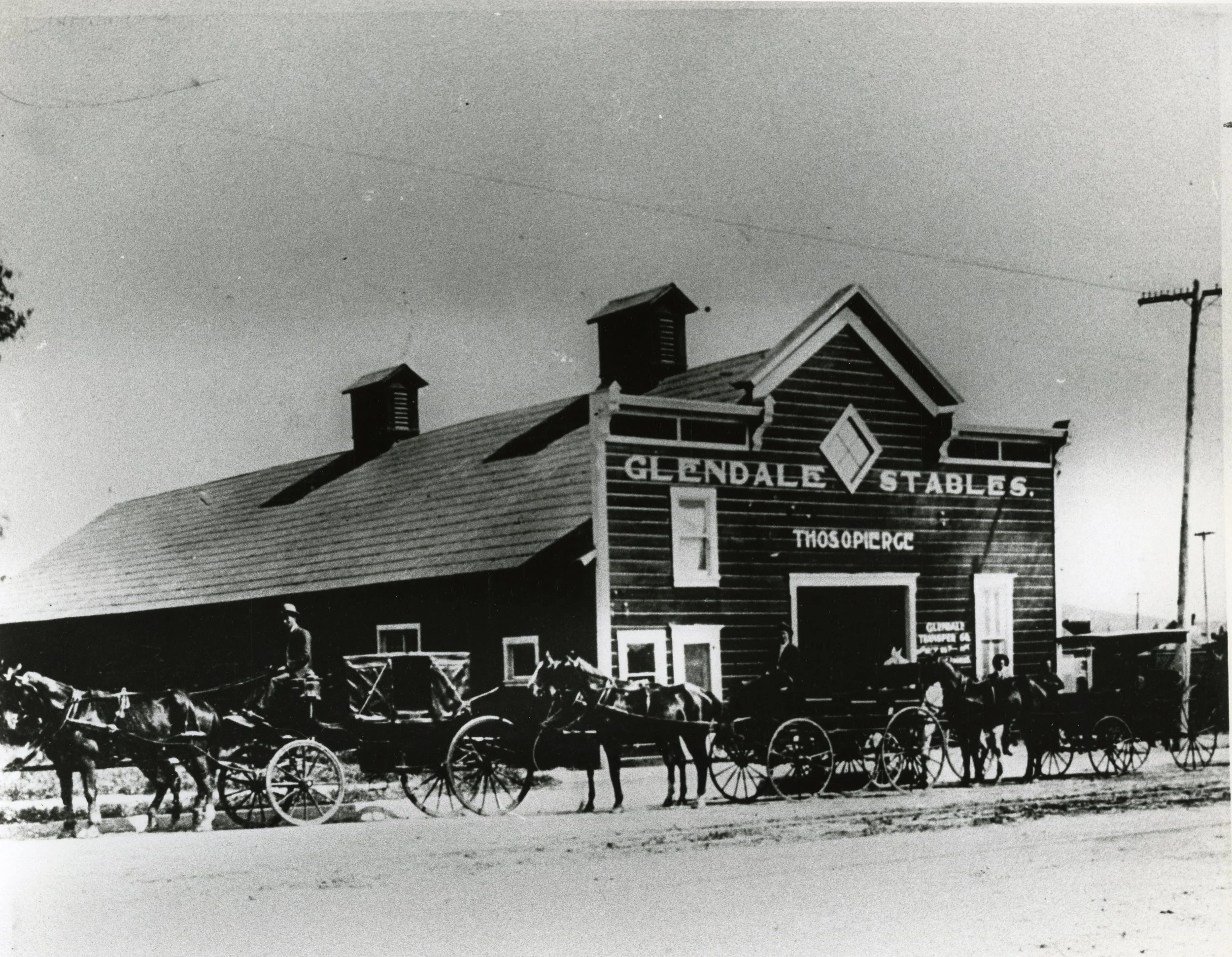
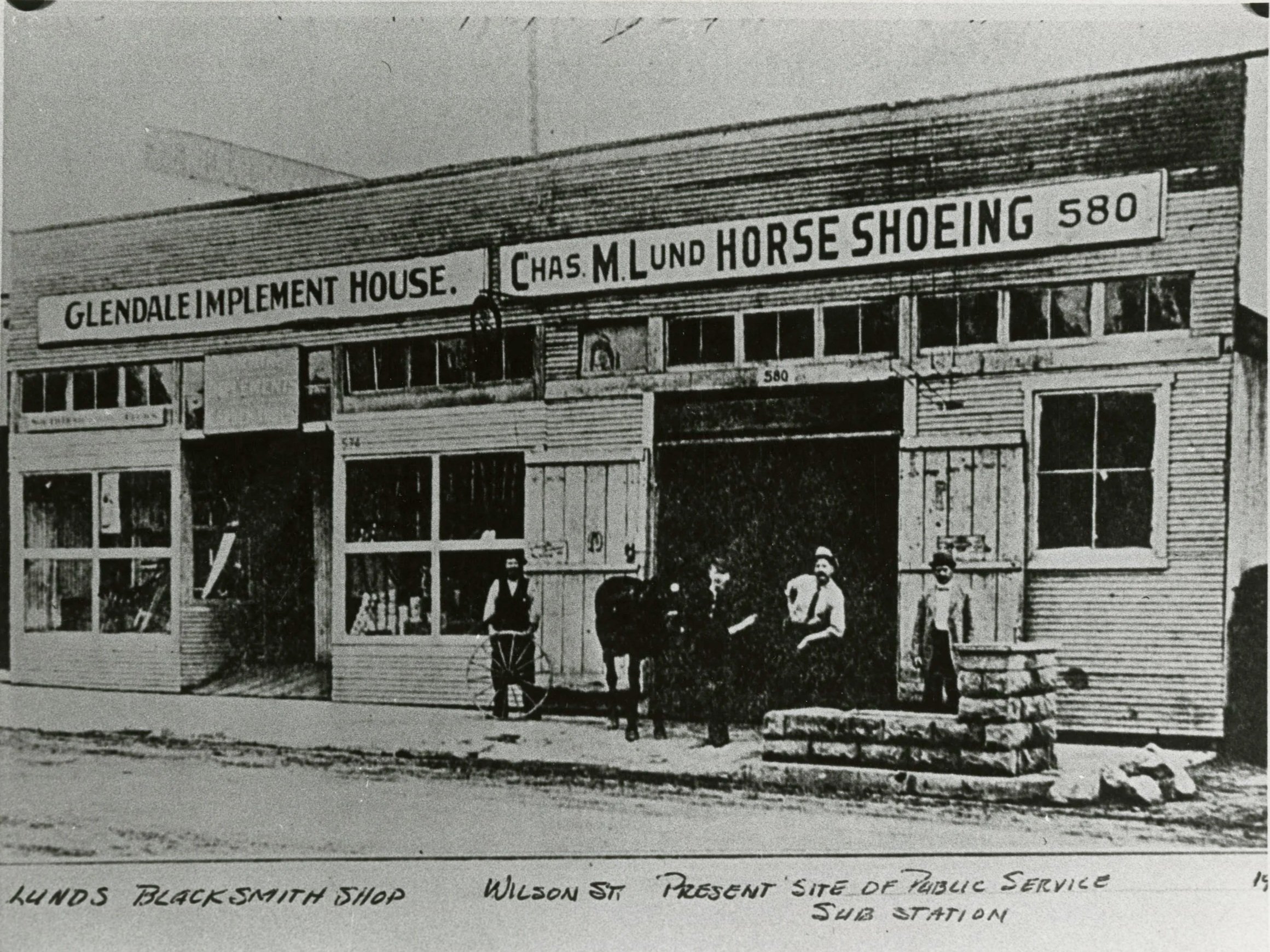
First Fire Station Built in 1908
Property was soon purchased on Howard Street and, in 1908, a one-story, brick building, measuring 25 by 30 feet, was constructed. According to GPD sergeant and historian Teal Metts, “there were matching double doors both front and rear, so the horse-drawn fire apparatus could pull in the back and be pointed out the front, exactly like they run their trucks today.” The horses were housed in a nearby stall.
The new fire station was topped by a tower housing a bell. According to Metts’ research, the bell was made by Charles Singleton Bell in Hillsborough, Ohio. Based on the text he could see from examining recent photos, he estimates that it was made between 1894-1907.
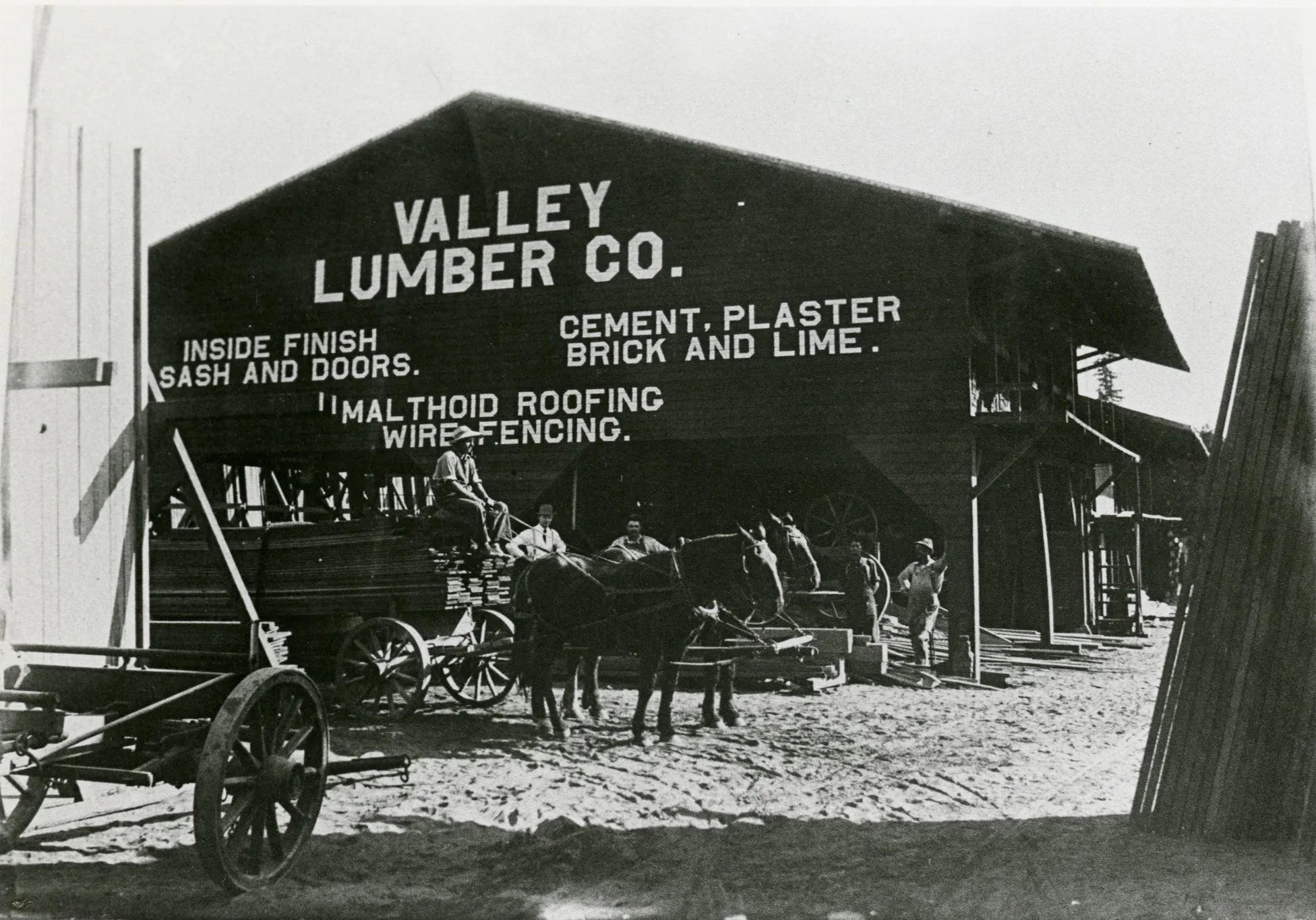
The new fire department faced its first major fire on June 9, 1910. It began at the Valley Lumber Company, owned by Clyde H. Boyd and Frank Bortelle, at Fourth Street (now Broadway) and Maryland. The clerk who discovered it sent word to the fire department, which rang the bell to summon firemen and volunteers. By the time they arrived, the building was beyond saving, so the men focused on preserving neighboring structures. Losses were estimated at $10,000.
By 1912, Glendale’s population was increasing rapidly and had grown in size from two square miles to eight. But the city’s fire equipment was still just one horse and a wagon, some hoses (with a separate hose reel) and one paid fireman, H.M. Miller, who served as both fire chief and as the city’s marshal.
Parcher speculated that the huge fire of 1910 finally persuaded the trustees to call for another bond election to improve fire fighting operations. A ‘motor-driven’ fire engine was ordered in 1913.
It was a ‘red letter’ for the city when the new Knox engine, painted white, with ‘Glendale Fire Department’ lettered on each side, was delivered. Equipped with two 40-gallon chemical tanks, 1500 feet of 2 1/2-inch hose and 200 feet of one-inch chemical hose, it cost $6,250. Parcher wrote that the entire Board of Trustees came to inspect the new engine. “In their enthusiasm, they decided to give it a little public exposure. So, with bells clanging, they drove it all over Glendale.”
The new engine was stored in a garage operated by A.H. Lankford on Broadway. Lankford was hired to drive the engine as needed, both day and night; requiring him to sleep in the garage at night. He was paid $80 per month. The horse and wagon were sold that December.
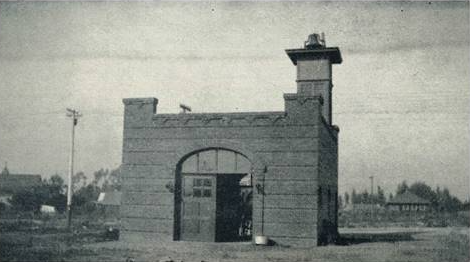
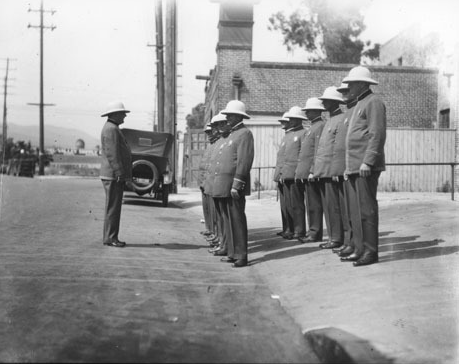
Credit: Ridge Route Communities Museum
Credit: Ridge Route Communities Museum
Larger Fire Station Built in 1914
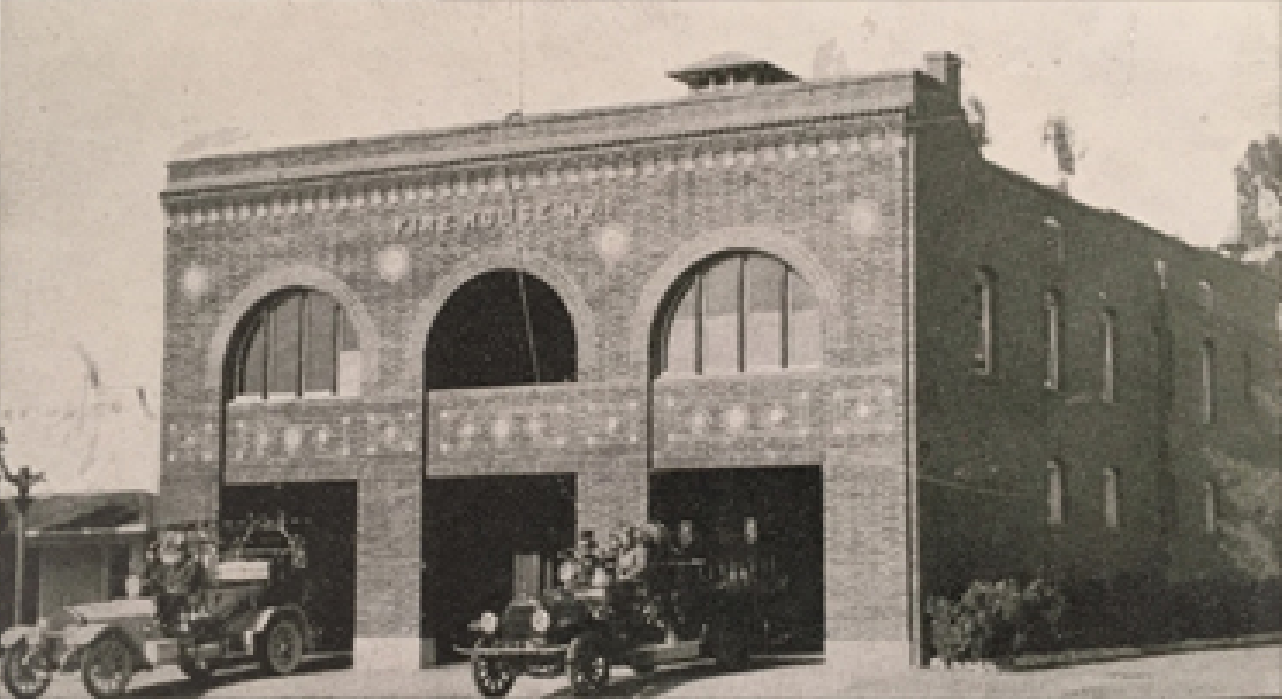
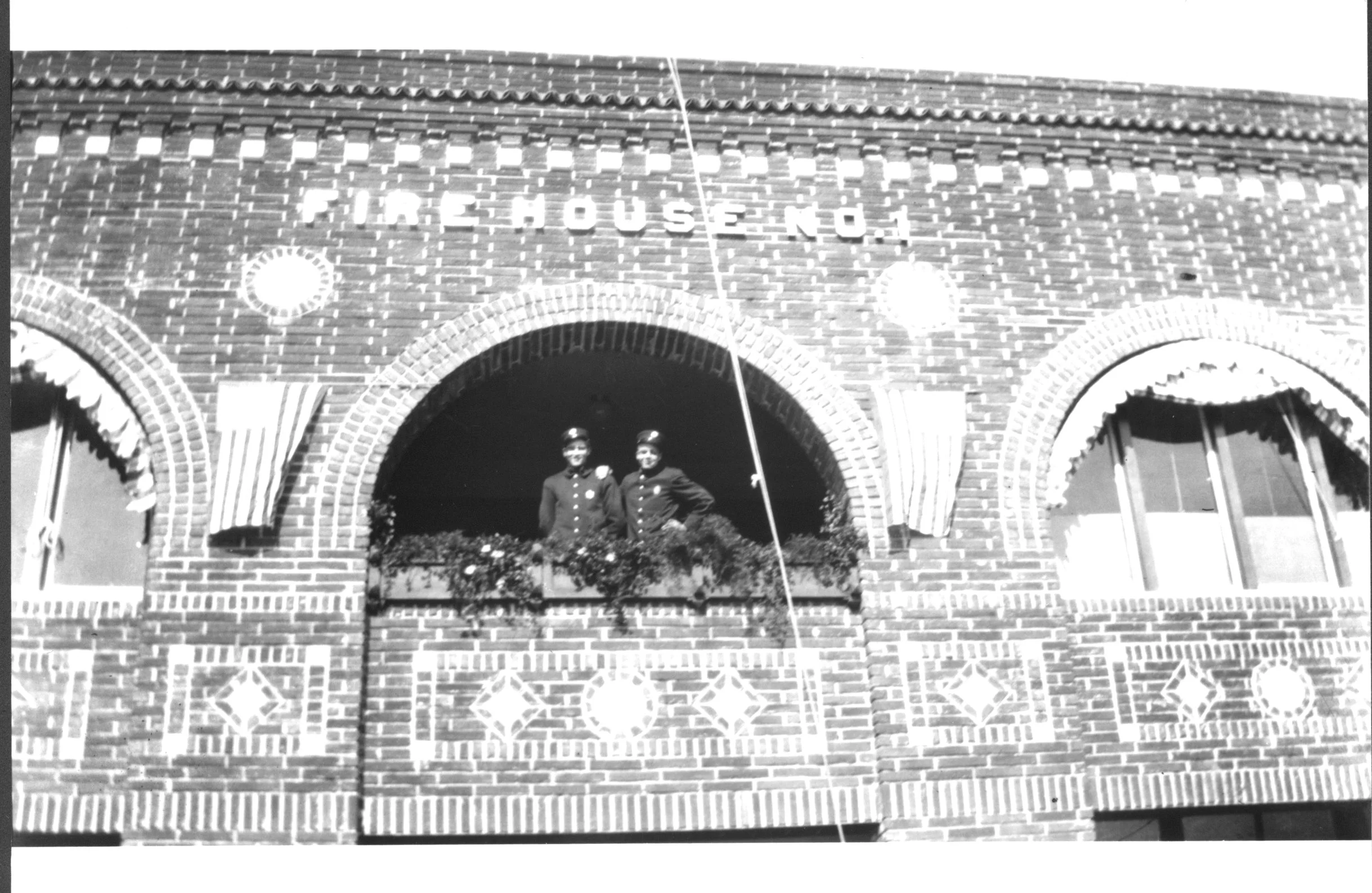
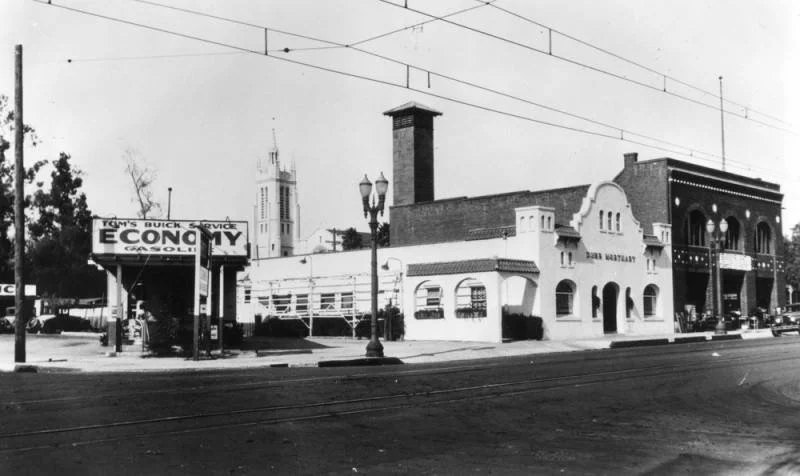
Miller resigned as fire chief and as marshal in January 1914 and George Herald succeeded him. In February, police and fire moved into a new fire station, at 311 E. Broadway (where the current post office sits today), along with the judge and space for a jail. The new building had a bell tower.
Lankford was appointed assistant fire chief. Additional paid personnel divided their time between the two departments. Also, several men - who had regular day jobs - volunteered for night duty, requiring them to sleep in the firehouse those nights. By 1916, the police and fire departments had separated. Two years later, Lankford became fire chief. His $110 a month salary made him the city’s first full-time salaried head of the fire department. Herald became Chief of Police.
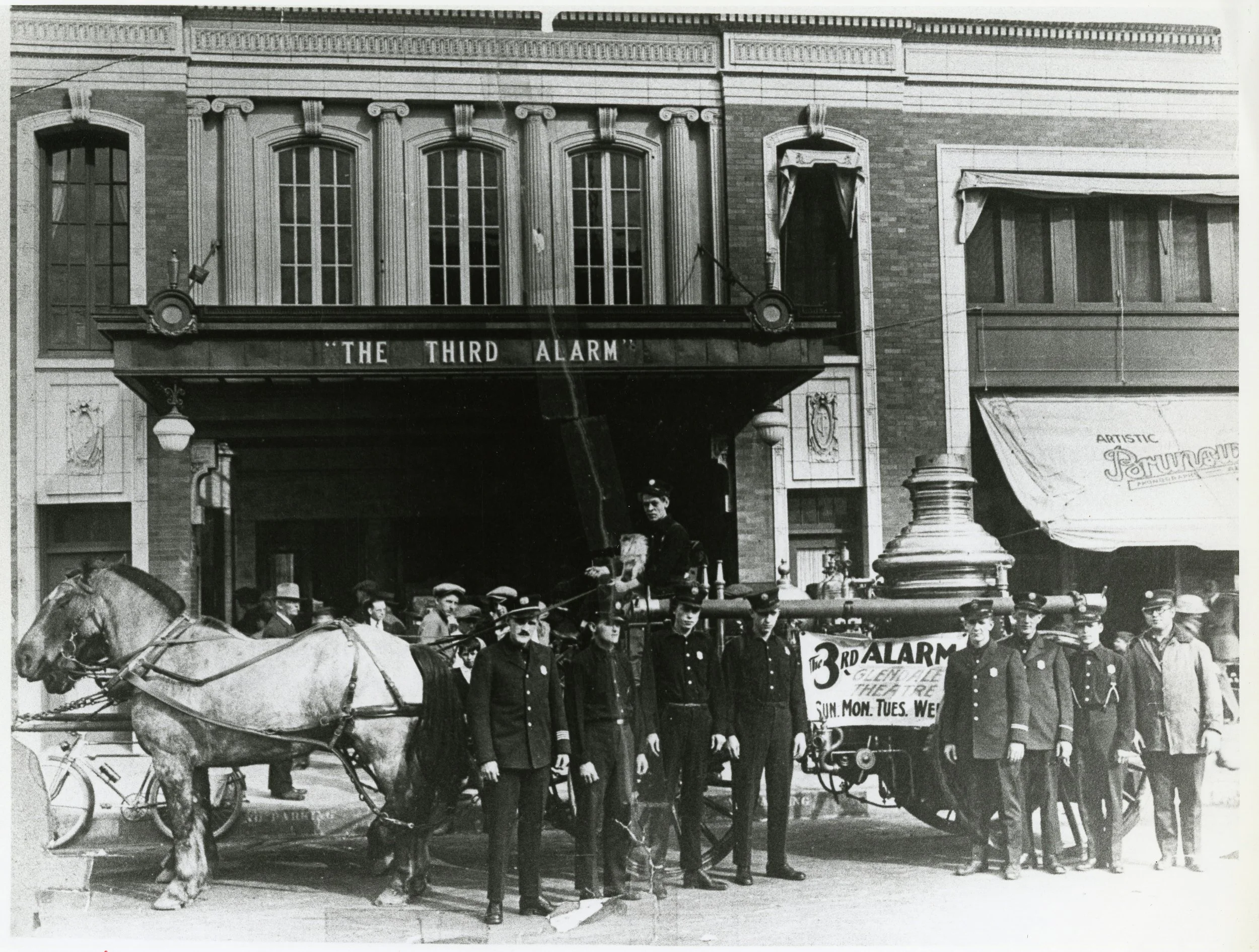
However, the separation of the two departments wasn’t complete. The jail remained in the fire house and police calls were still received there by the firemen on duty. They worked around the clock with three hours off for meals and a day off once a week. But changes were coming. In 1922, the volunteer system was abolished, as the department now had 3 fire stations, 11 drivers and 15 hose men. In 1923, members of the fire department held a benefit performance of a short play, ‘The Third Alarm,’ at the Glendale Theatre.
By 1927, there were seven stations located throughout the city. A staff of women operated an efficient alarm system, “a far cry from the old fire bell of the early days,” Parcher noted. By now, the fire bell had become obsolete, and it may have been put in storage, but eventually it resurfaced in a mountain community called Frazier Park.
And this is where we meet Harry MacBain.
Harry MacBain
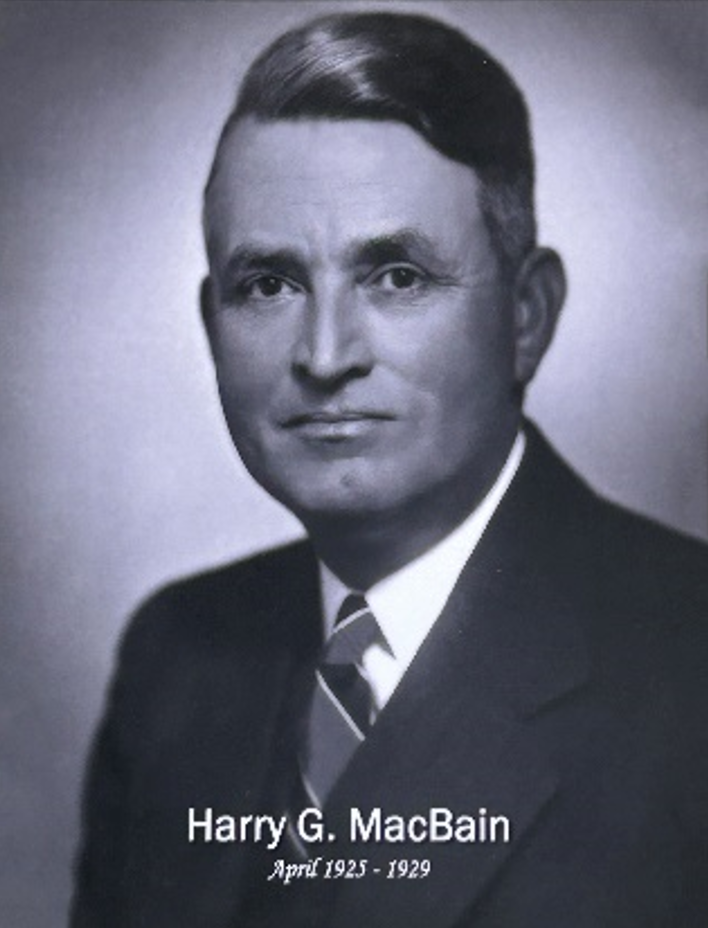
Harry MacBain, born in 1887 in Grand Rapids, Michigan, graduated from Battle Creek High School with honors and entered U of Michigan, but was compelled to leave due to financial circumstances. He went to work as a manager at C.W. Post Cereal Co., famously known for a beverage called Postum.
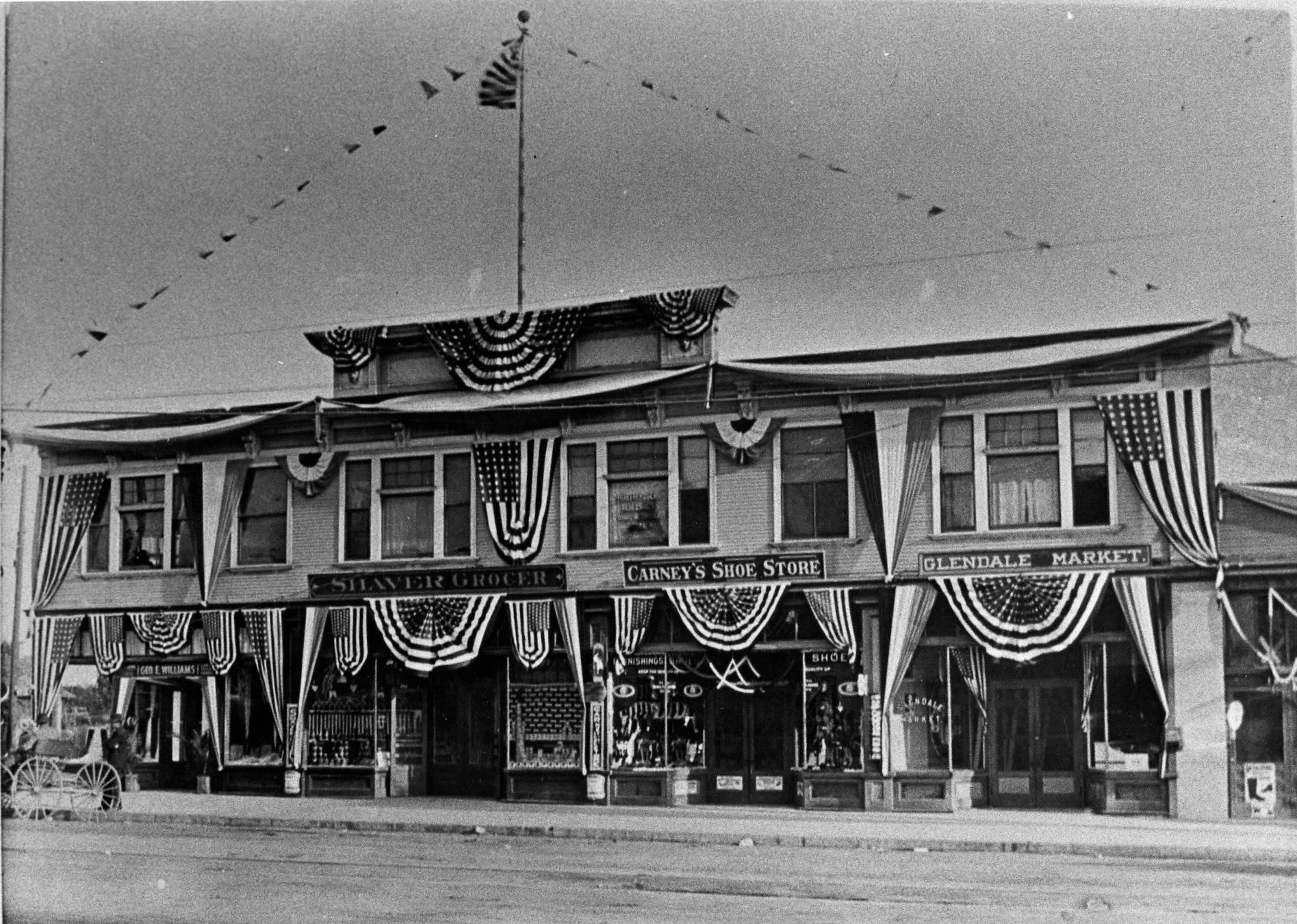
He left Michigan for California in the early 1900s and married a Nebraska native, Laura Wuff. He managed a grocery store here in Glendale, then headed for Nevada during the great mining boom. Returning with the proceeds from his Nevada labors, he purchased the Shaver Grocery Company in the Watson block at the corner of Broadway and Glendale Avenue around 1908, eventually renaming it MacBain Grocery. He and his wife lived on East Lomita. According to available records, they had no children.
MacBain was a charter member - and officer - of Glendale’s first Kiwanis club, organized in 1922. He was also a Mason and an Elk and was involved in a number of real estate enterprises. In 1924, the Glendale Evening News noted that he had real estate connections with Oakmont Heights, La Crescenta Oaks, and Frazier Mountain Park.
By then, he was well known in the city. In late December of that year, Councilman Asa Hall died and MacBain’s friends, mostly Glendale merchants who were advocating for a businessman on council, circulated a petition to have him appointed in Hall’s place. MacBain was soon installed.
The following April, he was an official candidate for council - along with 20 others. “He told prospective voters that he came to Glendale as a young man, but with little worldly goods. All he has made, he has made here and for this reason, wished to serve on council in an effort to pay a debt of appreciation,” according to the GEN April 15, 1925.
He received 4462 votes, the largest number of votes of all 21 candidates. Late on election night, he drove to the offices of GEN to hear the final returns. Stepping out of his automobile, a great crowd hailed him as Glendale’s next mayor. At the next council meeting, MacBain was nominated as mayor by business associate C. F. Kimlin. MacBain was unanimously elected, in front of one of the biggest audiences to pack the council chambers.
MacBain and Frazier Mountain Park
Parcher noted that, having been in the grocery business, MacBain “had been influenced by Glendale’s speedy expansion to go into real estate development and was a leader in many projects not only in Glendale, but in other cities as well.”
In 1924, MacBain and a group of investors purchased an 800-acre property, in an oak filled valley near Fort Tejon, from the Cuddy family. They planned to develop a mountain resort for Glendale families.
MacBain, who had 50 percent ownership, according to Ridge Route Communities Museum historian, Bonnie Kane, is credited with naming the proposed community Frazier Mountain Park, in a nod to nearby Frazier Mountain. (Many years before, the mountain had been named for a miner named Frazier, who had found a rock rich in gold ore while tracking down a wounded deer and began his mining operations on that spot.)
By 1854, Frazier Mountain trees were being cut to provide lumber for a new Army post at nearby Fort Tejon. A lumber mill was also constructed, attracting other lumber and mining operations. It was a bustling area through the 1920s, according to Wikipedia, which also notes that the Ridge Route, aka the Grapevine, opened in 1915. It was the first paved highway linking the LA basin with the San Joaquin Valley via the Tejon Pass.
The Kern County land, which had been in the Cuddy family for many years, was five miles west of Lebec, at an elevation of 4639 feet. By the early 1900s, it had become a popular vacation spot for new automobile enthusiasts. “Many of these campers were known to bed down on the hay in the Cuddy barn and to join in the recreational pack trains that were running over Frazier Mountain to Fillmore,” as noted on the Ridge Route website.
The investors subdivided the mountain property, then “let the citizens of Glendale know that a ‘second home’ community was being developed in the mountains, just for the people of Glendale,” Kane wrote in a recent email. “Frazier Mountain Park opened for sale in 1925, and, if you bought a lot in Glendale, you were also given a lot to camp on, or build a cabin on, in Frazier Mountain Park.”
The plans were to turn the 800 acres into an “up to date” country club with a club house, riding stables, golf course, seven lakes and rustic mountain cabin sites. Potential buyers were assured that “every lot sold would have a recreational easement to a park at the heart of the village, with its gracious oak trees and five ponds, archery range and swimming hole.” The lots were priced in the $100 to $200 range.
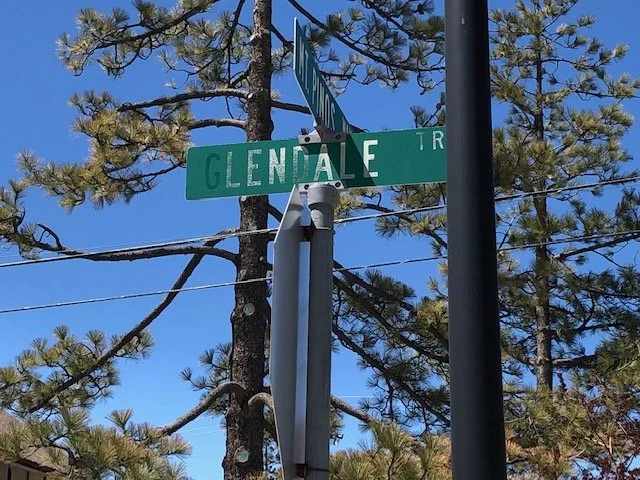
In a further connection to Glendale, the main street in the new development was named for Leslie Brand, often called the ‘Father of Glendale.’ Brand had been ill for some time and had died in April 1925. His funeral service, at his home, was attended by many Glendalians. Many of the streets crossing Brand Boulevard bore familiar names, including Glendale Trail.
Frazier Park’s Grocery Store
As a former grocer, MacBain saw the need for a place to purchase food and supplies. Soon, Charles and Merle Fife built a market - and established a post office - at the corner of Laguna Trail and Brand. Fife was named postmaster in 1927. He and his family lived in a small house behind the market.
MacBain and The Bell

Credit: Ridge Route Communities Museum
Not only did MacBain bring Glendale names, residents and services to Frazier Park, Kane suggests that he was most likely the force behind the community’s fire bell.
“All went very well until a serious fire in 1929 emphasized the need for a way of notifying residents of such a disaster in the remote community, as there were no phones or electricity yet.
As a new fire station had been built in Glendale, Mr. MacBain knew the old fire bell was not in use anymore and asked that it be donated to the Frazier Park community.” (The word “Mountain” had been dropped by that time, she noted). Kane speculates that the bell arrived in the early 1930s. GPD historian Metts noted that it was gifted to the community by MacBain.
Market owner Fife, who was also the leader of the fire volunteers, constructed a wooden tower just across Brand Blvd. from his market, and the new bell was hung from that tower. When rung, Kane wrote, “the bell let all in the canyon know that they should grab a shovel, hoe, wet blanket, whatever and run toward the smoke.”
MacBain Remained Active in Glendale

The Glendale Hotel at Broadway and Glendale opened in 1925 to great fanfare. Councilman MacBain took out a large newspaper ad promoting his grocery store just up the street from the new hotel. Note the phone number, Glendale 136 in the adjacent photo.
He was again selected as mayor in 1927. The next August, MacBain, still serving as mayor, announced his candidacy for Supervisor of the 5th District. He was running against incumbent Henry W. Wright, who had been elected to the Board in 1921. MacBain opened his headquarters at 135 S. Brand with Mrs. L.D. Torrey in charge. She focused much of her attention on female voters, telling the Glendale News Press on August 14, 1928, that many voters had called asking for his literature.
The 19th amendment, granting women the right to vote, had been approved by Congress just a few years before, in 1919. It was ratified in August of 1920, according to Wikipedia, which also noted that politicians responded to the newly enlarged electorate by emphasizing issues of special interest to women, especially prohibition, child health, public schools, and world peace. Despite his campaign efforts, MacBain was not elected to the Board of Supervisors. Wright held his seat on the board until 1932 when he was defeated by Roger W. Jessup, of Glendale.
MacBain served one four-year term on the Glendale City Council and was out of office by April 1929.
MacBain’s Dream Did Not Last
MacBain’s dream of a mountain getaway to be enjoyed exclusively by the citizens of Glendale, didn’t last. By 1930 the population had grown to about 150, but the Great Depression quickly took its toll. The price of lots dropped to $3 to $10 each.
“Busloads of folks were brought up for the day to see the area and enjoy a free picnic in the park,” as noted on the Ridge Route website. “The development was soon opened to all, with free lots given away at nearby county fairs to further encourage growth.”
The small, remote mountain community was soon beset by bootlegging, gambling and prostitution issues. Only five ponds were completed, and the golf course never happened. The developers borrowed against the areas set aside for the park and ponds, and when they could no longer make their payments, those areas were sold. The residents of the community were outraged. According to the website, residents formed the Frazier Park Protective Association, and some years later won a judgment in which the property was given back to the community under the care of the Kern County Parks System, as it still is today.
MacBain Died in 1948
MacBain passed away in 1948 and is interred at Forest Lawn Park Glendale, according to Find a Grave. He left a sister, Anna La Grange, of Glendale, who had served as a director of Glendale city schools for 23 years. She was a past president of the Glendale Professional Women’s Club and a member of the Order of Eastern Star and the White Shrine. She left her husband Edward and three nephews, Frank MacBain, Jr., and Arthur and Donald MacBain. She was the sister of Harry MacBain, former mayor of Glendale
The Grocery Store Continued
The Fifes operated the grocery store until the late 1940s, then sold it to Stephen and Jean Keithley from Oildale, a small community near Bakersfield. Stephen continued working for Union Oil in Bakersfield, while Jean ran the store.
Their daughter Jean and son-in-law, Vern Weigel, took over the market around 1949. They and their children lived in a rock house on Mt. Pinos Way until 1952, a year of natural disasters in the area, first a forest fire on Frazier Mountain followed by the devastating Tehachapi earthquake and aftershocks. Son Mike, who just begun first grade at Frazier Park School, a one-room learning center for grades 1-4, recalled recently that his mother was terrified by these disasters and insisted they return to San Diego.
The market floundered under the next owner. The Keithleys repossessed the property in 1957, and Vern and Jean agreed to return and take over the business. The Weigel family’s second stint in Frazier Park began in early 1958. They moved into the rooms that had been added to the original store, but didn’t stay long. “In a small town where everyone knew everyone else, some customers were audacious enough to knock and rattle the front doors at all hours after closing time, seeking an emergency half gallon of milk or some such,” Mike Weigel explained in a recent email. “My folks soon purchased a home at the southwest end of town, on the last street up a pock-marked dirt road.”
Vern expanded the store, which locals typically called Vern and Jean’s Market, and soon began making plans for a new building across Laguna Trail.
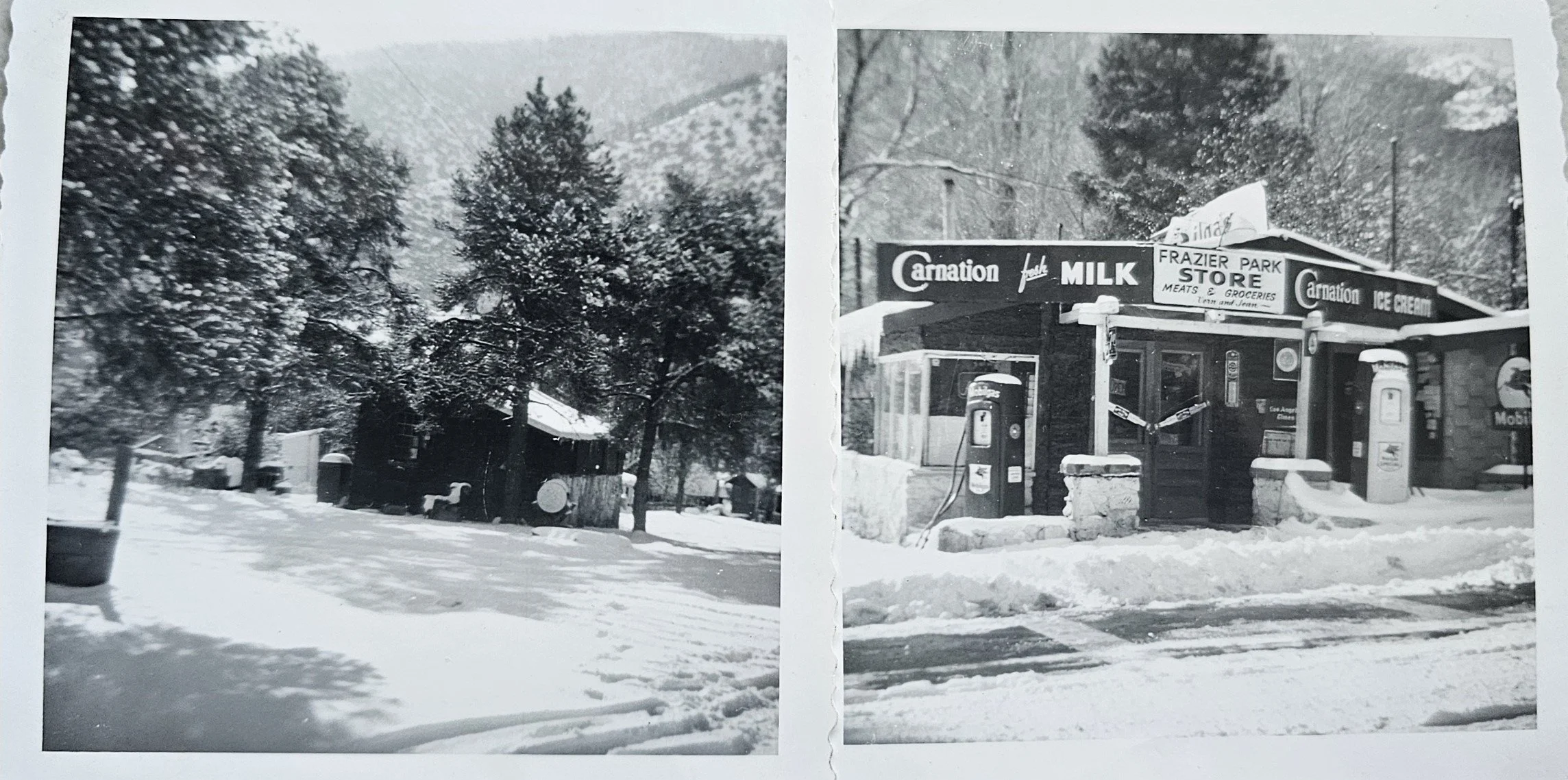
1951 Frazier Park Market - Original Frazier Park Market on the left, later market on right
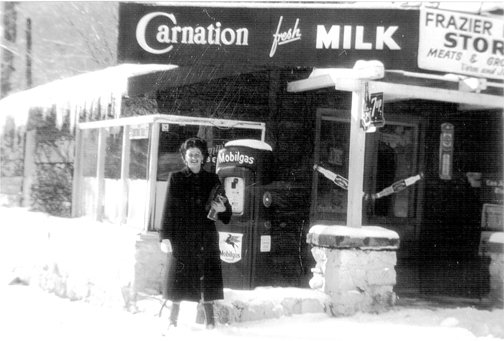
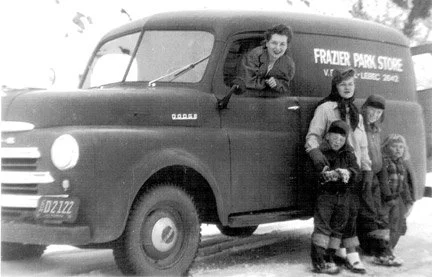

Credit: Mike Weigel
Schooling For Frazier Park Students
When the Weigels returned to Frazier Park in early 1958, Mike and his sister, Kim, enrolled at El Tejon School mid-year, Mike in the 6th grade and Kim in 4th. They rode the bus from Frazier Park, on the byroads through Lebec, picking up students and dropping them off at the school, some 10 or 12 miles away. There was one classroom per grade level. On Wednesdays, junior high boys spent time in wood shop, while the girls studied home economics.
High school was much further away, 45 miles away, in Bakersfield. The bus left Frazier Park at 6:30 a.m., driving along the side roads to Lebec and Fort Tejon to pick up students and arriving about 7:45 am. The bus left immediately after school, leaving no time to participate in sports or clubs. The ride up the Grapevine, in the right lane with the big semis, was very slow, Mike recalled. They’d arrive back in Frazier Park about 4:30 p.m.
The Bell
Despite the community’s initial adversities, the Frazier Park community survived and so did the bell. The bell provided a valuable service through the 1930s but when electricity finally arrived in the late 1940s, a siren was a more efficient way of notifying volunteers.
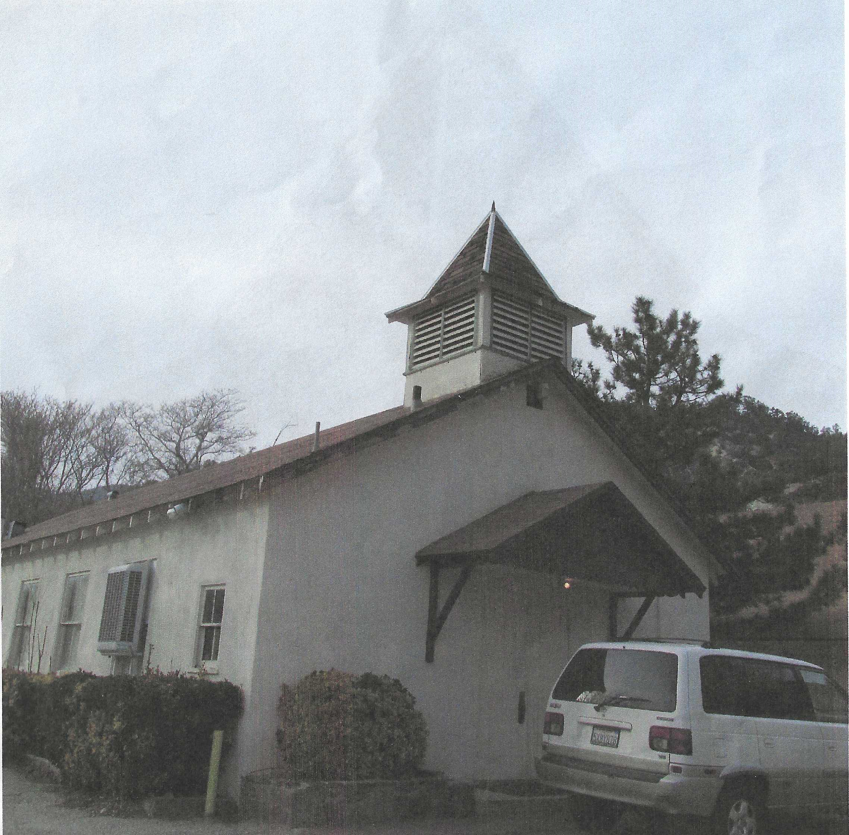
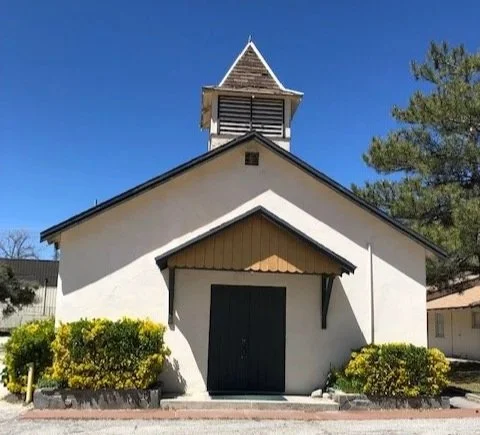
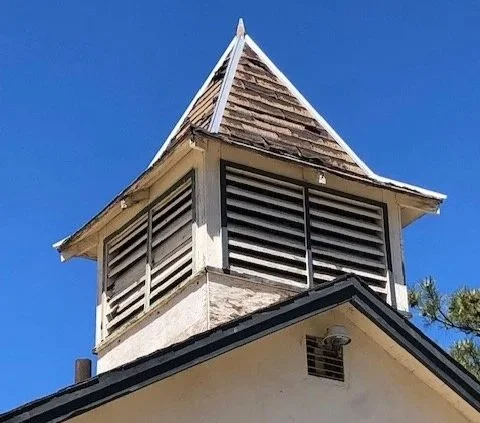
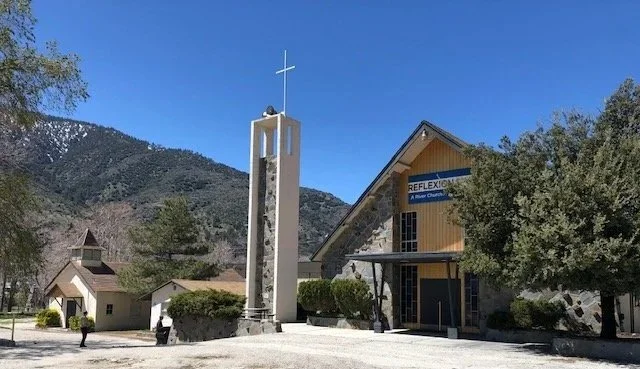
When a fire station was built in the 50s, the bell was relocated to the belfry of the first church in town, Community Baptist Church. Son Mike occasionally rang the bell before Sunday services.
The old wooden tower was moved to a municipal area across the valley.

Credit Ridge Route Communities Museum
Credit Ridge Route Communities Museum
Still Standing After All These Years
Credit: KPYamada
Frazier Park now has some 4000 permanent and part-time residents. All the original street names still exist except for Brand Blvd., which was changed to “Mt. Pinos Way” in the 1970s.
The Market
Credit: KPYamada
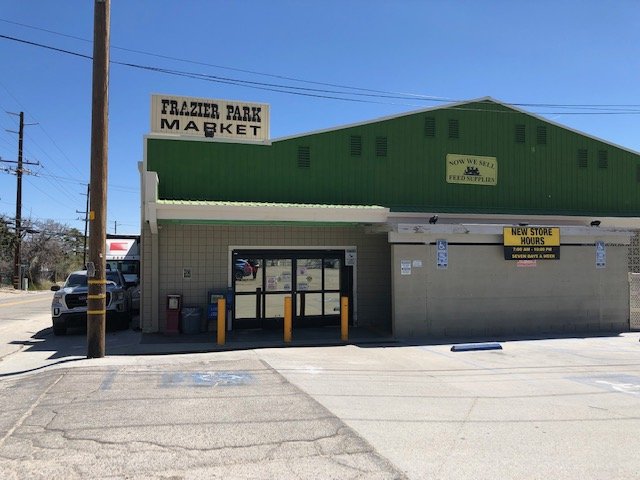
The market remains the heart of the community and has been described as the center of the town’s culture. It is “part of the glue that cements daily life with a friendly spirit of community in this mountain village,” as noted in a 2014 Mountain Enterprise article. “Neighbors greet each other in the aisles. They exchange news in the check-out line about family, schools, business, sports and mountain weather.”
Vern and Jean Weigel continued to operate the store until Vern’s death in 1974. Daughter Kim married her high school boyfriend, Jack Johnson, and they took over in the late 1970s when Jean sold the business to them. Jack hired his brother Rick to run the day-to-day operations. In 2014, they sold the market to three local businessmen: Rasem “Ray” Akari, Manhal “Mike” Khalil and Sameer “Sam” Khalil. “The three have been working and investing in the Mountain Communities for over 20 years,” according to The Mountain Enterprise, January 10, 2014.
The Bell
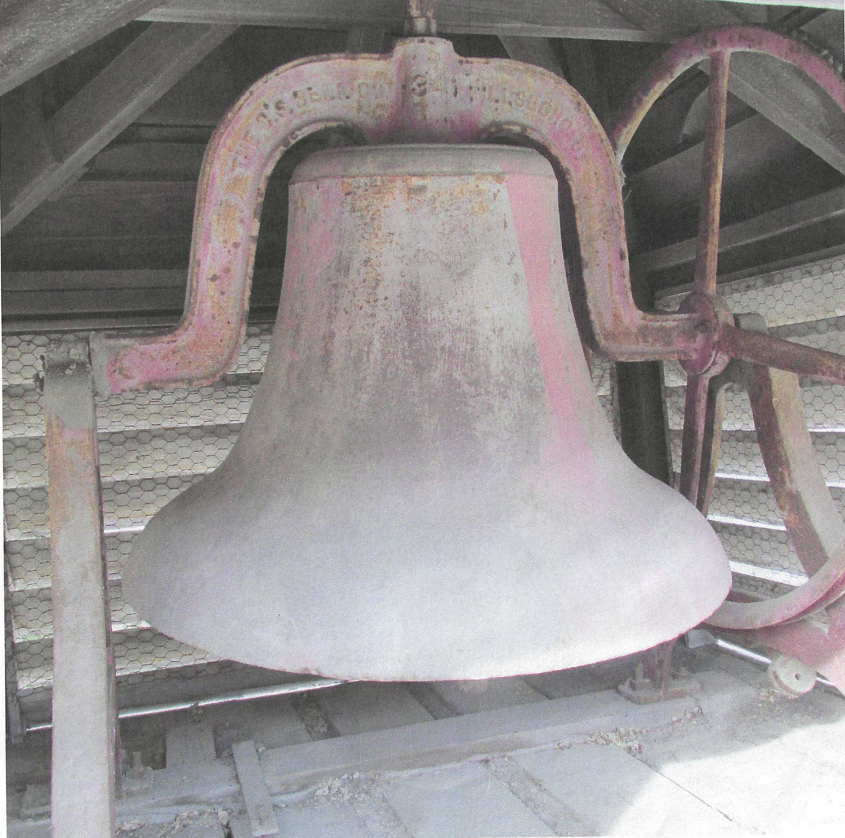
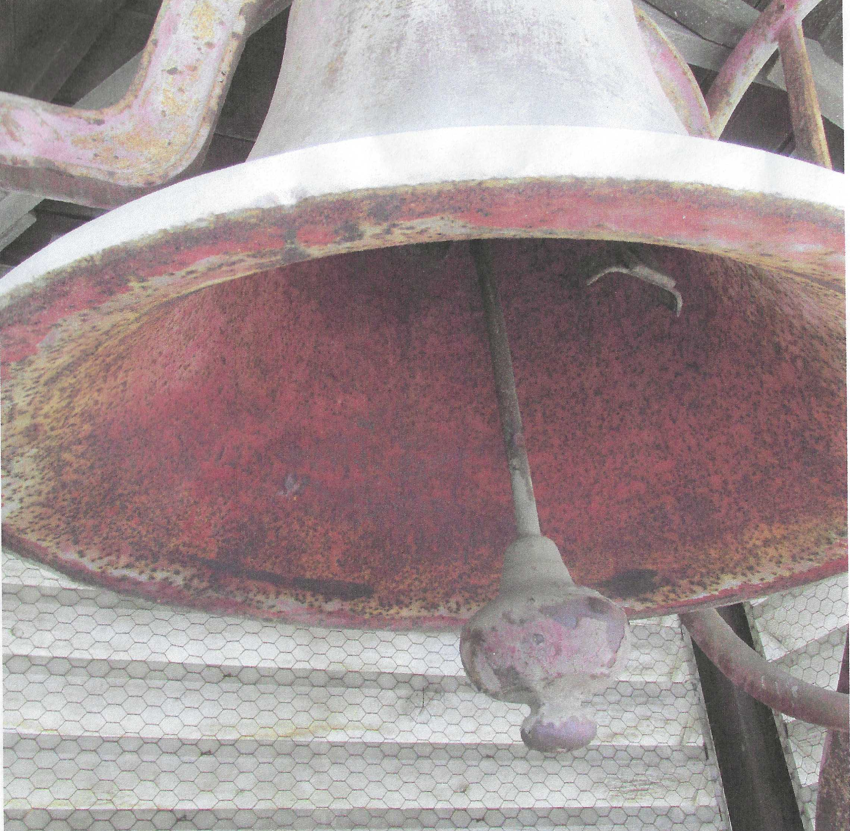
Nothing remains of the old wooden tower which once housed the bell. But the bell has continued to ring on many occasions. As of April 2026, it was still hanging in the belfry of the church.
Kane learned of the historic bell’s connection to Glendale several years ago and recently reached out to Metts to learn more about its history. Metts, who had seen close up photos of the bell, was thrilled to hear that it is still in place in Frazier Park.
He described the bell as one of the most prominent and historically important pieces dating back to the beginning of both the Glendale and the Frazier Park Fire Departments. “The bell in my eyes is just as significant as a police department’s very first badge. It is a literal identity of sorts to the fire service. Around the turn of the century these bells were the town’s communication to notify everyone within proximity of emergencies and of religious services to call the town together.”
“This is our very first bell from Station #1 as the city started to spread its wings in 1908-1914,” Metts noted in his email. “The bell is the exact same bell based on its shape, size, and distinct copper yoke and gear system used to ring it. Coupled with its location and story behind how it got there, I have no doubt left. An absolutely amazing piece that I’m actually at a loss for words that it still exists.”
Kane has long wished that a tower could be built to house the bell at the museum so all could know the story it has to tell. “The church has approved removing the bell and a replacement bell has been approved as well.” A grant has provided funds for the project, but museum personnel are still searching for a contractor who is willing to take on the job.
Help us REHOME The Bell
Credit: KPYamada
Credit: KPYamada
Credit: KPYamada
Resources
The Glendale History Room, on the second floor of the Central Library, has city directories dating back to 1906, photographs of early Glendale, and archival collections on the Glendale Unified School District, Forest Lawn, theaters of Glendale and other Glendale-related topics. Visits are by appointment only (please email glendalehistoryroom@glendaleca.gov.
Our local history was studied extensively by early historians, including John Calvin Sherer, who authored History of Glendale and Vicinity in 1922. Carroll W. Parcher incorporated much of that information in Glendale Community Book, published in 1957. A later version, Glendale Area History, was published in 1974 and expanded in 1981. Unless otherwise noted, much of what is included here is from these books and from Glendale, A Pictorial History.
*For more information about the Doctors House or to purchase the Labor of Love or Glendale, A Pictorial History, contact Glendale Historical at info@glendalehistorical.org with your request and a return email or telephone number.
The Ridge Route Communities Historical Society, formed in 1996, is dedicated to collecting and preserving the history and artifacts in the mountains south of Bakersfield and north of Castaic. Photos and items from the area may be viewed in the museum’s exhibit room and extensive files, covering every subject known to the mountain communities, are available for visitors to view and research. Open Year-round: Fri – Sun, 12:00 pm – 4:00 pm. info@ridgeroutemuseum.org, (661) 245-7747, 3515 Park Dr, Frazier Park, CA 93225
In addition to operating the Ridge Route Community museum, Kane is also the author of “A View from the Ridge Route,” a six-volume saga about the history of this region, including the epic story of the Cuddy dynasty and the land they settled. Additional information may be found in “A View from the Ridge Route“ series.
Glendale Evening News: December 20, 1924; January 26, 1925; April 25, 1925
Glendale News-Press, August 14, 1928
The Mountain Enterprise: January 10, 2014; April 19, 2019
Collector’s Issue: The Story of Frazier Mountain Park and its beloved pond, By Patric Hedlund, based on research by Bonnie Kane, Ridge Route Communities Museum historian
Who’s Who in LA County, 1927-28, Harry G. MacBain
Encyclopedia of California, Third Edition
Find a Grave
https://en.wikipedia.org/wiki/Women%27s_suffrage_in_the_United_States
Emails: Teal Metts, March 29, 2024; Bonnie Kane, March 31, 2026; Mike Weigel, April 16, 2026